
Best snorkeling spots, months and honest odds — from our own ranked catalog
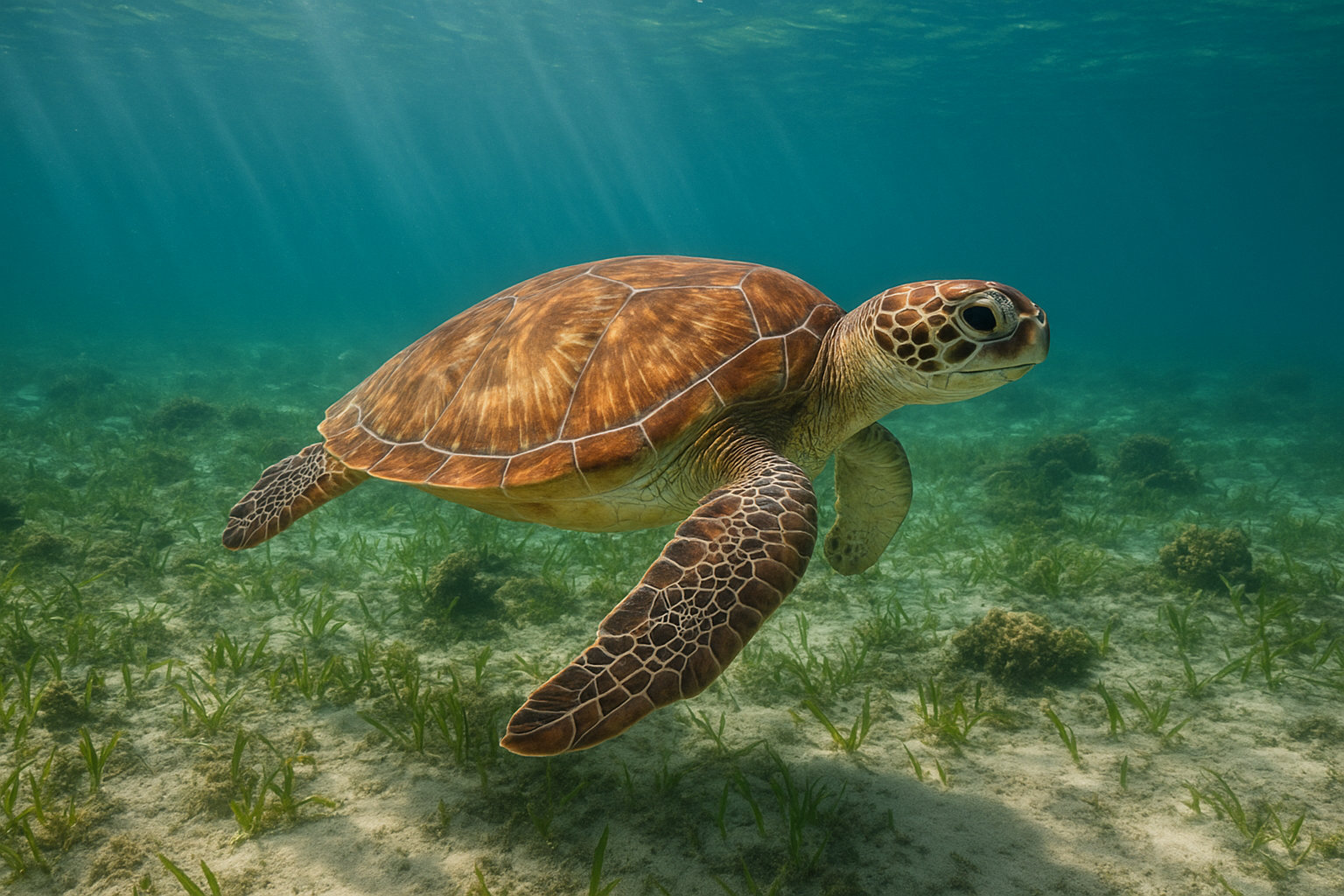
A green turtle cruising beneath you, unbothered, is the classic snorkeling encounter — and it is the one our catalog makes easiest to plan. Sea turtles are resident on most of the reefs we rank, and a few of our destinations make them a near-daily sighting: turtle points off small islands, seagrass bays where they feed, and shore reefs you can swim from the beach.
We keep this page honest the way we keep the whole catalog honest: every destination below comes from our own ranked data, the months come from our own seasonal research, and the etiquette is non-negotiable — a turtle that has to fight you for air is a turtle you have harmed, not a photo you have won.
Top destinations to swim with sea turtles
Every destination below is from our own ranked catalog — each link opens its destination guide on this site.
1. Hawaii
Green sea turtles — honu — are so dependable on Hawaii's shore reefs they are practically a fixture: the sheltered lava shelf at Two-Step, the north-shore sand channels and lava tunnels where young greens forage, and the protected bays where turtles are frequent visitors. Easy, walk-in, calm-protected water.
2. Gili Islands
The easiest turtles in our catalog: green and hawksbill turtles are a daily sighting rather than a lottery, on fringing coral and seagrass a fin-kick from three car-free islands. Turtle Point on Gili Meno is the signature swim, and the flats between the islands are the turtles' feeding ground.
3. New Caledonia
The largest enclosed lagoon on Earth puts turtles a short boat ride from Nouméa: marine-reserve islets ringed by coral with turtles, sea snakes and Napoleon wrasse, and an 81-hectare reserve islet where you swim with turtles straight off the beach. World-class water with far fewer crowds than its fame suggests.
4. Red Sea (Marsa Alam)
A shallow, sandy-bottomed bay over seagrass is the reason many snorkelers come to Marsa Alam at all: green turtles graze there — alongside the dugongs the bay is known for — in water only a few metres deep. Our copy is blunt about the odds: wild animals on nobody's schedule, and the seagrass is increasingly zoned, so never stand on it.
5. Maldives
House reefs put a drop-off at the end of your jetty, and the shallows between the islands draw green and hawksbill turtles year-round — most trips build in a turtle-focused snorkel on a shallow, calm reef. Dawn and dusk are the best hours for turtles and reef sharks cruising the house-reef drop.
6. Zanzibar (Mnemba)
Mnemba Atoll's protected coral gardens hold green turtles in bath-warm water a short boat ride from the beach, alongside the resident bottlenose dolphins. Tours are morning day trips; the long rains (roughly March–May) bring heavy showers and reduced visibility, so plan around them.
7. Palawan
A laid-back fishing-village coast with easy shore and short-boat snorkeling on coral gardens populated with turtles and smaller reef fish — a calmer, less groomed alternative to El Nido. A warm-water destination where the season question is the monsoon, not the temperature.
Best months to swim with sea turtles
Months per destination, from our own seasonal research — a seasonal pattern, not a forecast. Turtles are residents; sightings are never guaranteed in any month.
| Destination | Jan | Feb | Mar | Apr | May | Jun | Jul | Aug | Sep | Oct | Nov | Dec |
|---|---|---|---|---|---|---|---|---|---|---|---|---|
| HawaiiTurtles are residents year-round; our seasonal data marks roughly May–October the calmest, clearest water, with winter swells hammering the north shores. | possible — species resident year-round | possible — species resident year-round | possible — species resident year-round | possible — species resident year-round | good window | good window | good window | good window | good window | good window | possible — species resident year-round | possible — species resident year-round |
| Gili IslandsTurtles are a daily sighting year-round; the dry season (roughly May–October) gives the clearest shallow water — rain and runoff take the edge off visibility in the wetter months. | possible — species resident year-round | possible — species resident year-round | possible — species resident year-round | possible — species resident year-round | good window | good window | good window | good window | good window | good window | possible — species resident year-round | possible — species resident year-round |
| New CaledoniaThe cool dry season (roughly May–October) is the prime window, with September–November the sweet spot; the warm wet season (November–April) is cyclone season at its highest risk roughly February–April. | possible — species resident year-round | possible — species resident year-round | possible — species resident year-round | possible — species resident year-round | good window | good window | good window | good window | peak window | peak window | peak window | possible — species resident year-round |
| Red Sea (Marsa Alam)The Red Sea has no monsoon that closes it — swimmable all year, with spring and autumn broadly the most comfortable; turtles graze the seagrass year-round. | possible — species resident year-round | possible — species resident year-round | possible — species resident year-round | possible — species resident year-round | possible — species resident year-round | possible — species resident year-round | possible — species resident year-round | possible — species resident year-round | possible — species resident year-round | possible — species resident year-round | possible — species resident year-round | possible — species resident year-round |
| MaldivesTurtles are residents year-round in bath-warm water; dawn and dusk are the best hours on the house reefs. The monsoon split (dry December–April, wet May–November) is about wind and rain, not turtles. | possible — species resident year-round | possible — species resident year-round | possible — species resident year-round | possible — species resident year-round | possible — species resident year-round | possible — species resident year-round | possible — species resident year-round | possible — species resident year-round | possible — species resident year-round | possible — species resident year-round | possible — species resident year-round | possible — species resident year-round |
| Zanzibar (Mnemba)Turtles are residents year-round; the Kaskazi (roughly December–March) brings the calmest crossings and the Kusi (June–September) sits inside the dry peak season, while the long rains (March–May) are the window to avoid. | good window | good window | avoid per our data | avoid per our data | avoid per our data | good window | good window | good window | good window | good window | possible — species resident year-round | good window |
| PalawanThe drier months (roughly November–May) bring the calmest seas and best visibility; the wetter half of the year can bring heavier showers and choppier water, especially in exposed passages. | good window | good window | good window | good window | good window | possible — species resident year-round | possible — species resident year-round | possible — species resident year-round | possible — species resident year-round | possible — species resident year-round | good window | good window |
Legend: ● peak window · ◐ good window · ○ possible (resident year-round) · × avoid per our data · · no month claim in our data. Seasonal pattern, not a forecast — conditions vary; verify local conditions and rules before you go.
Tips for snorkeling with sea turtles
Never chase a turtle to the surface
A turtle that swims away from you is holding its breath, not playing. Never crowd, chase, touch or block a turtle's path up to breathe — the Gili notes say it plainly, and it is the single rule that decides whether a turtle stays on a reef.
The seagrass is the food — stay off it
Green turtles graze seagrass meadows, which is exactly why they are where they are. Never stand on it, drag fins through it or anchor in it: at Marsa Alam's bays the seagrass areas are increasingly zoned or roped off, and for good reason.
Dawn and dusk are turtle hours
Our Maldives copy puts it best: dawn and dusk are the best hours to catch turtles cruising the house-reef drop-off. Mornings are also the calmest water on most of our turtle coasts — take the early session and let the afternoon boats have the crowds.
Pick one reef and go slow
Turtles reward patience over coverage. Choose one shallow reef, drift it slowly and quietly, and give it two or three sessions rather than racing between sites — sightings are never guaranteed anywhere, and a relaxed reef usually gives more than a rushed one.
Book your Hawaii snorkeling
Every button opens one of our booking partners live — tours on Viator and Klook, flights on Aviasales, hotels on Booking.com — where you set your own dates and see current prices and availability.
Affiliate links — we may earn a commission at no extra cost to you. No prices are shown here: each partner's live site shows prices and availability for your dates.
Swimming with sea turtles — questions
Where are sea turtles easiest to see while snorkeling?
Our catalog's easiest are the Gili Islands — green and hawksbill turtles are a daily sighting rather than a lottery — and Hawaii's shore reefs, where the honu are so dependable they are practically a fixture. Both are swim-from-the-beach water with no boat required.
Do I need a boat to swim with turtles?
Often not. Hawaii's Two-Step, the Gili Islands' shore reefs, New Caledonia's reserve islet and parts of the Maldives' house reefs are all reachable from the beach or a very short swim. Boat trips add the deeper reefs, but the classic turtle swims here are shore snorkels.
Can I touch a sea turtle?
No. Turtles are protected wildlife, and touching, chasing or riding one harasses it — it can also strip the mucus layer off their shells and interrupt the breathing they need to surface for. Give every turtle room to rise, breathe and leave.
Is a turtle sighting guaranteed?
No — though some destinations come closer than others. The Gilis' turtle point delivers sightings on most days, and Hawaii's resident honu are famously dependable, but they are wild animals. Plan the reef, enjoy the whole reef, and treat the turtle as a bonus.
More wildlife
More species guides from our catalog: