
Best snorkeling spots, months and honest odds — from our own ranked catalog
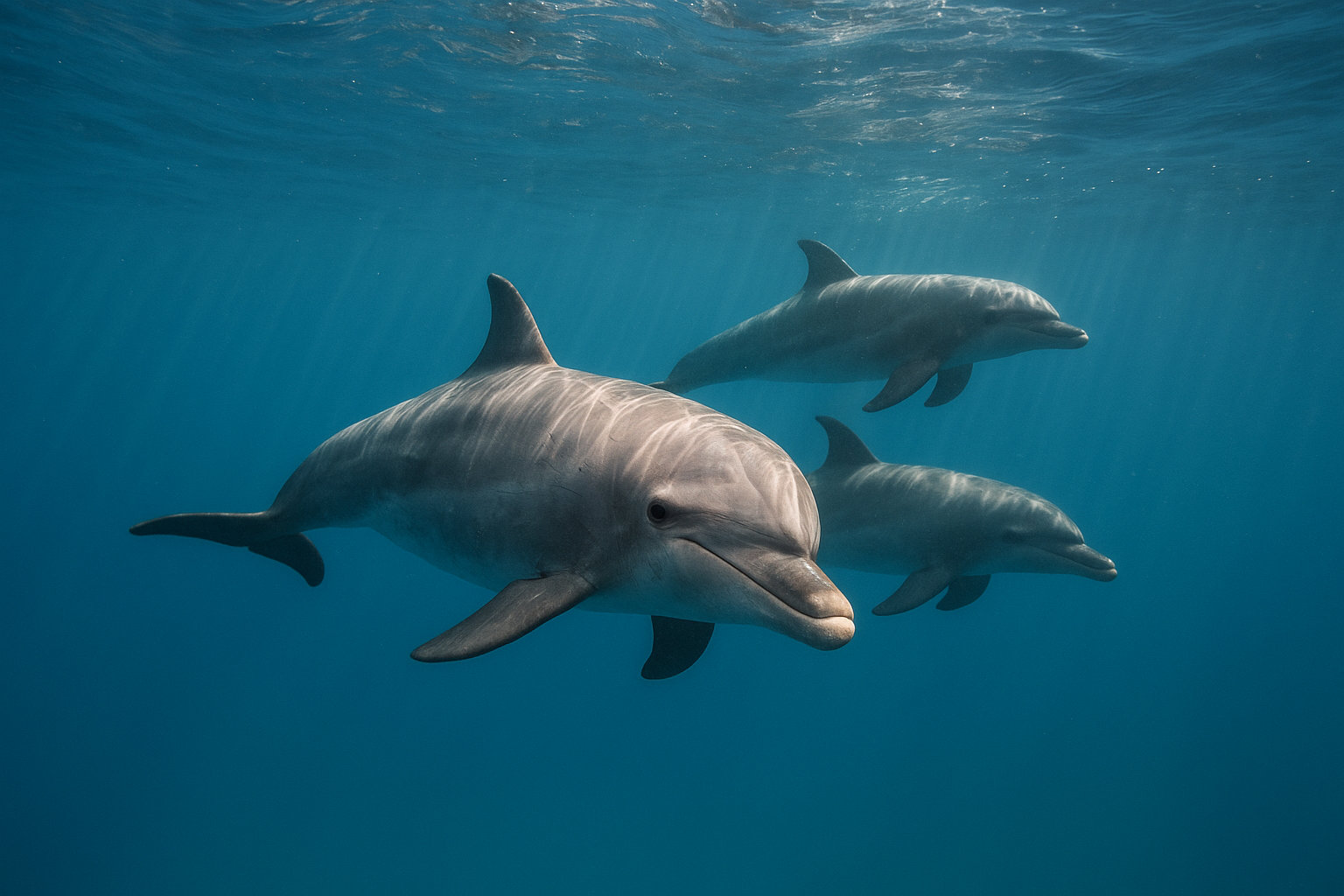
Dolphins are the encounter everyone wants and the one we refuse to oversell. Wild dolphins choose whether to come to you, and the operators in our catalog work on that term — no captive-style promises, no chasing pods for a photograph. Five destinations make our honest list, and they range from a reef where resident bottlenose are met almost daily to a bay where in-water access is banned outright.
That range is deliberate. Several of the best dolphin waters are protected precisely because resting pods need the water left alone, and a page that skipped them would be lying by omission. Read the boundaries on this page carefully — where you can swim, where you watch, and why the difference matters — and the encounters you do get will be the kind worth having.
Top destinations to swim with dolphins
Every destination below is from our own ranked catalog — each link opens its destination guide on this site.
1. Zanzibar (Mnemba)
The best in-water dolphin odds in our catalog: Mnemba Atoll's protected coral gardens hold resident bottlenose dolphins that operators meet almost daily, alongside green turtles and 300+ fish species — reached by a short boat ride from the beach, no liveaboard required. Morning day trips; the crossing runs roughly 20–40 minutes depending on the sea state.
2. Red Sea (Sha'ab Samadai)
The Dolphin House: a horseshoe-shaped reef enclosing a shallow lagoon where a resident population of spinner dolphins rests during the day. The reef itself is a proper coral site in snorkel depth, and the draw is the chance of dolphins moving through the lagoon while you are in the water — a managed zone, so verify what is currently permitted locally.
3. French Polynesia (Rangiroa)
The atoll's two passes are its famous water: on an incoming tide the flow funnels through and carries you past grey reef sharks, dolphins, turtles and big schools in some of the clearest water in the country. This is drift snorkeling at scale — not beginner water — and the encounter is a bonus on top of a genuinely great drift.
4. Hawaii (Kealakekua Bay)
A deep, clear bay beneath the Captain Cook monument, famous for its spinner dolphins and rich fringing reef. Our copy states the boundary plainly: it is a Marine Life Conservation District where the spinner dolphins are protected — keep your distance and never chase or enter the water around them. The bay's snorkeling is superb on its own terms.
5. Fernando de Noronha (Dolphin Bay)
Baía dos Golfinhos is a resting bay for spinner dolphins — watched from the clifftop lookout above it, because the pods come in through the day and the bay's protection is the reason they still do. Our copy is explicit: look, but do not swim — in-water access is not permitted. It is listed here so the boundary is clear, and the island's clear water and turtles carry the rest of a visit.
Best months to swim with dolphins
Months per destination, from our own seasonal research — a seasonal pattern, not a forecast. Dolphins are wild animals; sightings are never guaranteed in any month.
| Destination | Jan | Feb | Mar | Apr | May | Jun | Jul | Aug | Sep | Oct | Nov | Dec |
|---|---|---|---|---|---|---|---|---|---|---|---|---|
| Zanzibar (Mnemba)Dolphins are residents year-round; the Kaskazi (roughly December–March) brings the calmest crossings and the Kusi (June–September) sits inside the dry peak season, while the long rains (March–May) make the Mnemba crossing choppy. | good window | good window | avoid per our data | avoid per our data | avoid per our data | good window | good window | good window | good window | good window | possible — species resident year-round | good window |
| Red Sea (Sha'ab Samadai)The Red Sea stays swimmable all year with no monsoon that closes it; spring and autumn broadly give the most comfortable balance, and wind decides an individual day more than the season does. | possible — species resident year-round | possible — species resident year-round | possible — species resident year-round | possible — species resident year-round | possible — species resident year-round | possible — species resident year-round | possible — species resident year-round | possible — species resident year-round | possible — species resident year-round | possible — species resident year-round | possible — species resident year-round | possible — species resident year-round |
| French Polynesia (Rangiroa)The dry, cooler season (broadly May–October) brings the steadiest boat days; within any season the tide matters more than the calendar — the passes work on the incoming flow. | possible — species resident year-round | possible — species resident year-round | possible — species resident year-round | possible — species resident year-round | good window | good window | good window | good window | good window | good window | possible — species resident year-round | possible — species resident year-round |
| Hawaii (Kealakekua Bay)Dolphins rest in the bay year-round; the drier summer months (roughly May–October) bring the calmest seas, and winter swells hammer the north shores while the south and west shores stay forgiving. | possible — species resident year-round | possible — species resident year-round | possible — species resident year-round | possible — species resident year-round | good window | good window | good window | good window | good window | good window | possible — species resident year-round | possible — species resident year-round |
| Fernando de Noronha (Dolphin Bay)The drier months (broadly August–February) give the calmest seas and clearest water; the wetter half (March–July) brings more rain and swell. Access to the bay itself is by clifftop lookout, not by water. | good window | good window | possible — species resident year-round | possible — species resident year-round | possible — species resident year-round | possible — species resident year-round | possible — species resident year-round | good window | good window | good window | good window | good window |
Legend: ● peak window · ◐ good window · ○ possible (resident year-round) · × avoid per our data · · no month claim in our data. Seasonal pattern, not a forecast — conditions vary; verify local conditions and rules before you go.
Tips for snorkeling with dolphins
Know which encounters are in-water — and which are not
Our five destinations split honestly: Mnemba and Sha'ab Samadai are in-water encounter waters under rules, Rangiroa's passes can carry you past dolphins on a drift, and Kealakekua Bay and Dolphin Bay are protected or watch-only. Read the boundary before you book, not after.
Let them come to you
Wild dolphins are curious, but they decide. Drift quietly, keep your kicks smooth, and let the pod approach or not — swimming hard at a pod ends the encounter for you and everyone else in the water. The dolphins that stay are the ones you did not chase.
Resting pods are off-limits — for good reason
Spinner dolphins rest in shallow, sheltered bays after hunting at night, and human pressure on resting pods is exactly why places like Kealakekua are conservation districts. Never chase, block or enter the water around a pod — the boundary is the reason the pods are still there.
Book operators who follow the codes
The encounters worth having come from operators who time trips to the animals' behavior, keep group sizes small and follow local access rules — including the ones that say watch-only. Ask how they handle a resting pod before you pay; their answer tells you everything.
Book your Zanzibar, Tanzania snorkeling
Every button opens one of our booking partners live — tours on Viator, flights on Aviasales, hotels on Booking.com — where you set your own dates and see current prices and availability.
Affiliate links — we may earn a commission at no extra cost to you. No prices are shown here: each partner's live site shows prices and availability for your dates.
Swimming with dolphins — questions
Can I swim with wild dolphins?
In some places, under strict rules — Mnemba Atoll's tours and the managed lagoon at Sha'ab Samadai are in-water encounter waters, and Rangiroa's drift can carry you past dolphins. In others — Kealakekua Bay, Fernando de Noronha's Dolphin Bay — the water is protected or watch-only, and the rules are real. Check the boundary for your destination before you go.
Is a dolphin sighting guaranteed?
No — and no honest operator promises one. Zanzibar's Mnemba dolphins are met almost daily because they are resident there, which is as close as the ocean gets to reliable, but they are wild animals. Treat every encounter as a bonus on top of the reef itself.
Why are some dolphin bays off-limits?
Because resting matters. Spinner dolphins hunt at night and rest in shallow, sheltered bays by day, and human pressure on resting pods harms them. Protected zones like Hawaii's Marine Life Conservation Districts and Noronha's Dolphin Bay exist to keep the pods there — the boundary is the reason you still get to watch them.
What should I do if a dolphin approaches me?
Stay calm and still, keep your arms at your sides, and let the animal investigate and move on. Never grab, ride or chase — and never follow a dolphin out to deeper water. A curious dolphin passing close is the encounter; a pod you harassed is one that left.
More wildlife
More species guides from our catalog: