
Best snorkeling spots, months and honest odds — from our own ranked catalog
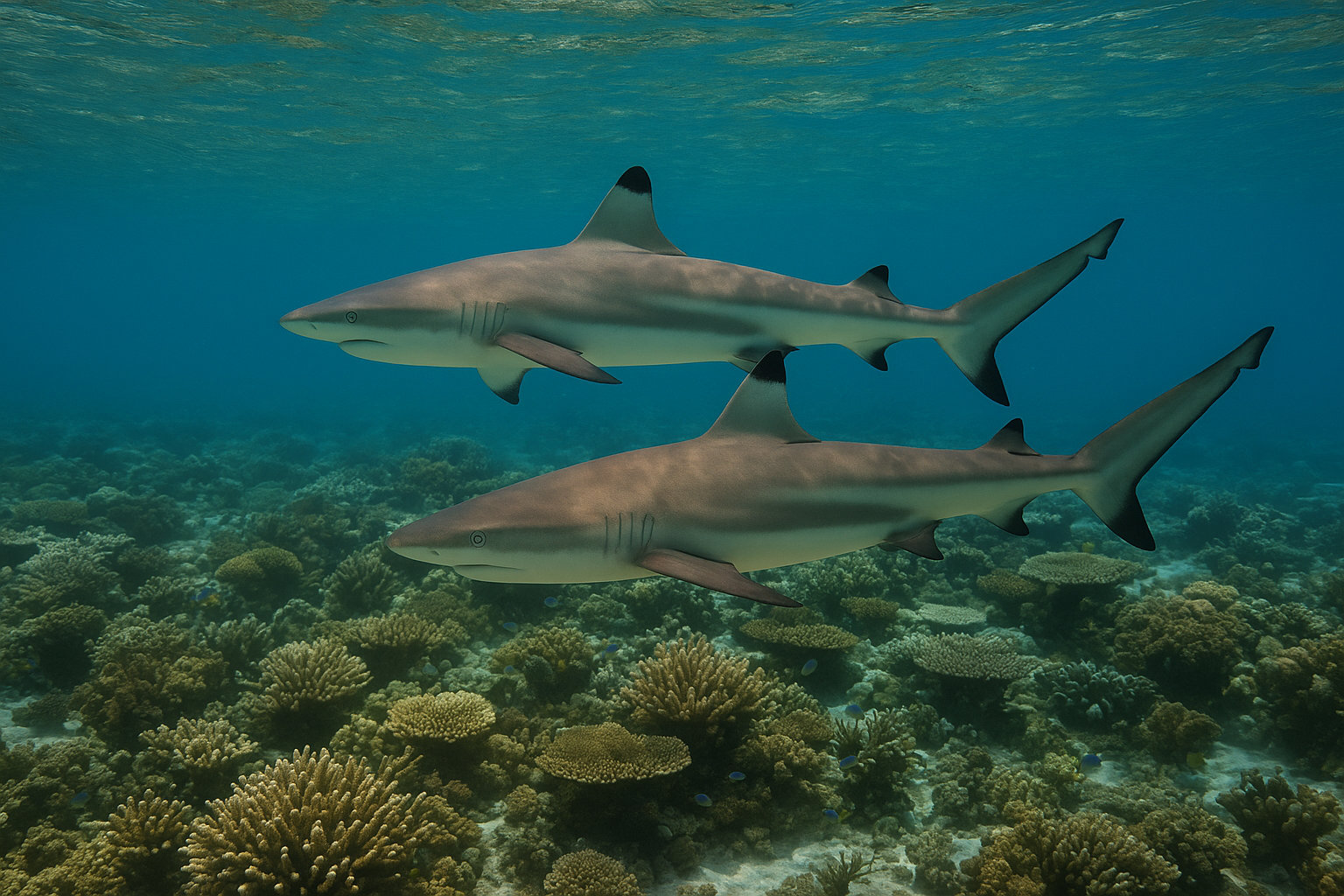
Reef sharks are the classic silhouette of a good snorkeling trip: a blacktip pattern crossing the sand beneath you, unbothered, gone before your camera catches up. We rank the destinations where that happens from the surface — and we are just as clear about the boundary where the sharks you have heard of belong to divers, because that distinction changes what you book.
This page lists seven catalog destinations where sharks are either genuinely part of the snorkel or clearly labelled as dive-side water. The etiquette is the same everywhere: sharks are shy, conditions decide the day, and the aggregation sites carry rules that exist because the encounters do.
Top destinations to swim with reef sharks
Every destination below is from our own ranked catalog — each link opens its destination guide on this site.
1. French Polynesia
The most accessible shark snorkeling in our catalog: Moorea's wide shallow lagoon holds stingrays and blacktip reef sharks over the sand in wadeable depth, Bora Bora's coral gardens carry rays and small sharks over the sand shallows, and Rangiroa's passes are drift snorkels past grey reef sharks on the incoming tide. Our copy adds the honest note: the Moorea sandbar aggregations exist because operators have fed them for years — controversial locally, so follow the rules and never expect the encounter on a given day.
2. Belize
Hol Chan Marine Reserve's famous Shark Ray Alley is shark water for everyone: nurse sharks and southern rays gather in shallow, manageable water, and the protected cut of the reef holds a marked underwater trail. A full barrier reef with easy marine-park snorkeling — the Blue Hole itself is a dive, but this is the part snorkelers get.
3. Yap
Beyond the mantas that made it famous, Yap's reefs carry patrolling reef sharks in easy snorkel range: steep walls carpeted in daisy corals with eagle rays, turtles and reef sharks out in the blue, the wall top sitting in easy snorkel range when conditions are calm. The same tide-reading guides who run the manta channels run this water.
4. Galápagos
The channel between Kicker Rock's twin towers is the famous swim: sea lions, turtles and schooling fish share it, with the chance of hammerheads and other sharks in the deeper water around it — one of the archipelago's landmark sites. Almost everything here is boat-based and under park rules, and the cooler season is when the big life shows.
5. Komodo
Current-swept and rich, Komodo's water holds mantas, sharks and spectacular reef drop-offs — best for confident swimmers who can hold a line and a reference point. The sharks ride the same currents that bring the mantas to the cleaning points, so a good manta day is often a good shark day, with a guide who reads the tide.
6. Tonga
The gentlest entry on this list: easy, shallow hard-and-soft-coral gardens busy with reef fish, turtles and the occasional reef shark, with calm entries that suit all levels. Tonga's calendar is built around the humpback season (roughly July–October), which is also the cooler, drier stretch with the clearest water.
7. Sipadan
The name everyone knows — with the honest label our copy leads with: the wall that made Sipadan famous, turtles and reef sharks working the edge, is genuinely world-class as a dive, seen with a tank. The snorkeler's water here is the shallow fringe on the island itself and the bright patch-reef flats of Mabul and Kapalai; a reef shark on the crossing is a bonus, not a promise. And one hard boundary: check your government's current advisory for eastern Sabah waters before booking — ours does.
Best months to swim with reef sharks
Months per destination, from our own seasonal research — a seasonal pattern, not a forecast. Sharks are residents on these reefs; encounters are never guaranteed in any month.
| Destination | Jan | Feb | Mar | Apr | May | Jun | Jul | Aug | Sep | Oct | Nov | Dec |
|---|---|---|---|---|---|---|---|---|---|---|---|---|
| French PolynesiaSharks are lagoon residents year-round; the dry, cooler season (broadly May–October) brings the steadiest trade winds and reliable boat days. In the Tuamotus the tide matters more than the calendar — the passes work on the incoming flow. | possible — species resident year-round | possible — species resident year-round | possible — species resident year-round | possible — species resident year-round | good window | good window | good window | good window | good window | good window | possible — species resident year-round | possible — species resident year-round |
| BelizeThe dry season (roughly late November–April) brings the calmest seas and clearest water; the wetter months stay snorkelable — it is comfort and visibility that change, not safety. | good window | good window | good window | good window | possible — species resident year-round | possible — species resident year-round | possible — species resident year-round | possible — species resident year-round | possible — species resident year-round | possible — species resident year-round | possible — species resident year-round | good window |
| YapThe broad good-conditions stretch runs roughly November–May with mantas present throughout; exposed sides can chop up in the trade-wind season. Water barely moves from 27–28°C all year. | good window | good window | good window | good window | good window | possible — species resident year-round | possible — species resident year-round | possible — species resident year-round | possible — species resident year-round | possible — species resident year-round | good window | good window |
| GalápagosThe cooler, drier season (broadly June–November) drives the Humboldt upwelling and the richest big life, in noticeably colder water; the warmer December–May window is calmer but thinner on pelagics. | possible — species resident year-round | possible — species resident year-round | possible — species resident year-round | possible — species resident year-round | possible — species resident year-round | good window | good window | good window | good window | good window | good window | possible — species resident year-round |
| KomodoThe dry season (roughly April–November) brings calmer, steadier conditions; the wetter December–March window peaks the plankton and the megafauna. Tides and currents swing within a single day — trust local tide tables over any season guide. | peak window | peak window | peak window | good window | good window | good window | good window | good window | good window | good window | good window | peak window |
| TongaReef sharks are an occasional sighting over the shallow gardens; the whale season (roughly July–October) is also the clearest-water window, and November edges into cyclone season. | possible — species resident year-round | possible — species resident year-round | possible — species resident year-round | possible — species resident year-round | possible — species resident year-round | possible — species resident year-round | good window | good window | good window | good window | possible — species resident year-round | possible — species resident year-round |
| SipadanThe driest, most settled stretch runs roughly March–October, with the north-east monsoon months (November–February) the wettest; rain, not temperature, decides the visibility here. | possible — species resident year-round | possible — species resident year-round | good window | good window | good window | good window | good window | good window | good window | good window | possible — species resident year-round | possible — species resident year-round |
Legend: ● peak window · ◐ good window · ○ possible (resident year-round) · × avoid per our data · · no month claim in our data. Seasonal pattern, not a forecast — conditions vary; verify local conditions and rules before you go.
Tips for snorkeling with reef sharks
Be still — sharks are shy
Reef sharks read noise and movement as trouble. Sudden splashing, kicking hard or crowding their line makes them slide away; calm, quiet surface swimming usually gets you the closest look. If one approaches you, hold your position and let it decide.
Know which water you are booking
The famous shark sites split cleanly in our catalog: lagoon shallows like Moorea and Shark Ray Alley are snorkeler water, while the drop-offs — Rangiroa's fast passes, Komodo's channels, Sipadan's wall — are drift or dive water that needs a guide and a confident swimmer. Book the one that matches you.
Follow the site's rules exactly
Some aggregations exist because of feeding, and our copy says so plainly — Moorea's sandbar sharks are fed by operators, a practice that is controversial locally. Never touch or grab an animal, follow whatever rules your operator and local authorities set, and treat every encounter as a privilege rather than a show.
Respect the water, not just the animal
Current-carried water is where the sharks live, and it is also the hazard for snorkelers: wear the float, stay with the guide, and know where your exit is. A shark you never see is better than a current you cannot handle — the sea state is the part you control.
Book your French Polynesia snorkeling
Every button opens one of our booking partners live — tours on Viator, flights on Aviasales, hotels on Booking.com — where you set your own dates and see current prices and availability.
Affiliate links — we may earn a commission at no extra cost to you. No prices are shown here: each partner's live site shows prices and availability for your dates.
Swimming with reef sharks — questions
Is it safe to snorkel with reef sharks?
Yes, with respect. Blacktips, whitetips and nurse sharks are shy animals that avoid people, and the encounters happen on their terms — calm swimmers, no touching, no chasing. The real hazard at these sites is the water they live in (currents, passes), which is why guided water is guided.
Where are reef sharks easiest to see from the surface?
French Polynesia's lagoons — blacktip reef sharks over the sand in wadeable depth — and Belize's Shark Ray Alley, where nurse sharks gather in shallow, manageable water, are the most accessible. Rangiroa's passes deliver grey reef sharks to confident drift snorkelers on the incoming tide.
Can I feed or touch a shark?
No. Never touch, chase or feed one. Some sites' aggregations exist because operators have fed the animals for years — a controversial practice locally — and every responsible operator now runs no-contact rules. Observe, photograph, and let the animal own its direction.
Do the famous shark sites always work for snorkelers?
No — and honesty is the point of this page. Sipadan's wall and Fakarava's south pass are dive water; the Galápagos' Kicker Rock is a swim with chances in the deeper channel rather than a guarantee. Every destination on this page says plainly which side of that boundary it sits on.
More wildlife
More species guides from our catalog: