
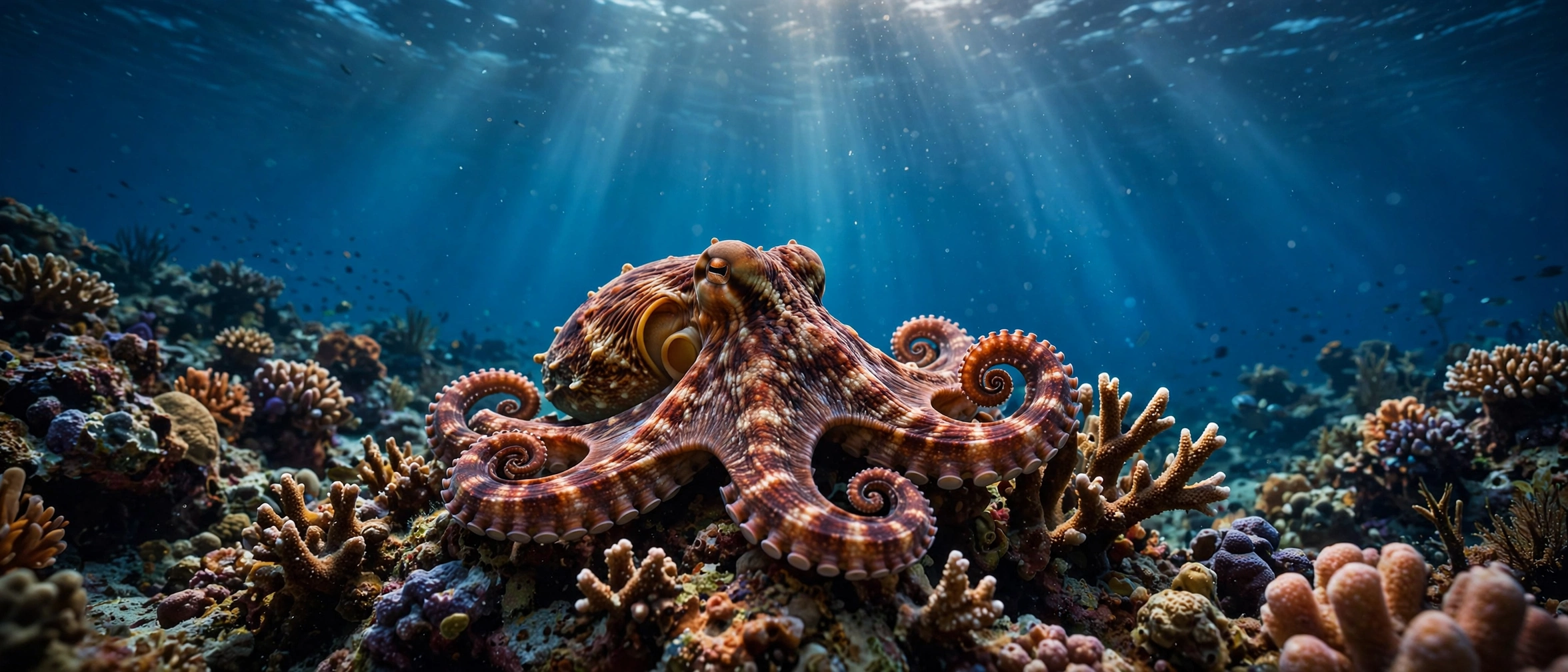
Of all the animals we meet on a reef, the octopus is the one we look for first — not because it is the biggest or the brightest, but because it is the one most likely to be looking back.
We will not sell it to you, though: the octopus is arguably the least predictable animal on any reef. It is present on almost every reef we rank and almost always missed, and sightings are never guaranteed. The destinations below are chosen for the terrain that suits octopus — crevices, rubble, lava shelves, seagrass edges — not for a promise. Each links to its destination guide on this site, with the months our seasonal data marks best.
Octopus country — where to look
Every destination below is from our own ranked catalog — each link opens its destination guide on this site. These are habitat picks, not sighting promises; sightings are never guaranteed.
1. Raja Ampat
The richest reefs on Earth — unmatched biodiversity in glass-clear water.
Typically seen year-round in warm water; the drier season, roughly October–April, brings calm seas and peak visibility.
2. Sipadan, Malaysia
A dive-first limestone island off Sabah — famous for walls that drop out of snorkel depth, with the real shallow-reef snorkeling next door at Mabul and Kapalai.
Typically seen year-round; the driest, most settled stretch runs roughly March–October, with November–February the wettest.
3. Alor
An Indonesian dive frontier with real but secondary snorkeling — read the framing, because Alor's headline water is dive water.
Typically seen year-round in sheltered water — our data hedges deliberately on exact months; verify the window with a local operator.
4. Hawaii
Volcanic reef gardens, green sea turtles and manta night snorkels in clear Pacific water.
Typically seen year-round; the drier summer months (roughly May–October) bring the calmest seas and clearest conditions.
5. Red Sea Egypt
Desert-coast coral where the snorkeling is shore and shallow reef — and the famous walls stay dives.
Typically seen year-round — the Red Sea has no monsoon that closes it.
6. Gozo
Malta's quieter island — Mediterranean limestone, a famous blue hole and a swimming-pool-blue lagoon.
Typically seen in the warmest, calmest water from late spring through early autumn; winter wants a wetsuit, so the shoulders are often the best compromise.
How to actually meet one
Drift, don't chase
Move slowly, stay quiet, never touch, and never block the way out of its hole.
Give it room and time
Give it room and time, and often it will come out to look at you.
Look for the den
A neat pile of empty shells near a hole is a good clue you have found a den; the animal itself may be watching you long before you spot it.
Read the answer
Then be slow, be quiet, and be brief. If it pulls back into its hole, that is its answer, and you drift on.
Book your Raja Ampat snorkeling
Every button opens one of our booking partners live — tours on Viator, flights on Aviasales, hotels on Booking.com — where you set your own dates and see current prices and availability.
Affiliate links — we may earn a commission at no extra cost to you. No prices are shown here: each partner's live site shows prices and availability for your dates.
Meet the animal properly
Our full octopus article — why it is the animal we always look for first, and what its folded genome says about that brain:
The Octopus: The Animal We Always Look For First →