
Best Snorkeling in Tubbataha Reefs
6 min read · Field guide
Tubbataha Reefs Natural Park is the Philippines' expedition reef: two atolls and a small third reef — North Atoll, South Atoll and Jessie Beazley — rising from deep water in the middle of the Sulu Sea, roughly a 10–12 hour boat crossing from Puerto Princesa on Palawan. It has been a UNESCO World Heritage Site since 1993, a strictly protected no-take park of roughly 97,000 hectares, and the reward for that protection is a reef that still works the way reefs used to: around 600 fish species and some 360 coral species reported, sharks cruising the edges — tiger sharks among them — sea turtles everywhere, and schools of jacks thick enough to block the light. There is no resort, no day-trip boat and no shore. You live aboard for the week, the park is open only from roughly mid-March to mid-June, and several of the permitted liveaboards welcome snorkelers as genuine participants rather than passengers. This guide is about what that actually looks like from the surface.
Seasonal guidance, not a forecast — no live tide tables, weather or marine advisories here; check local conditions before you go.
Why Tubbataha is great for snorkeling
The honest version first. Tubbataha is famous for its walls, and the walls are dives — the drop-offs that made the park's name fall well past snorkel depth, and this guide does not pretend otherwise. What a snorkeler gets is the other half of the atoll: the shallow reef flats, coral terraces and lagoon edges that sit inside snorkel range, in open-ocean water clear enough to see the deep blue begin beneath you. Because the park is strictly no-take and sees visitors for only a few weeks a year, that shallow reef is in extraordinary condition — dense coral, enormous gorgonian sea fans, and fish life in numbers that busier reefs have long since lost.
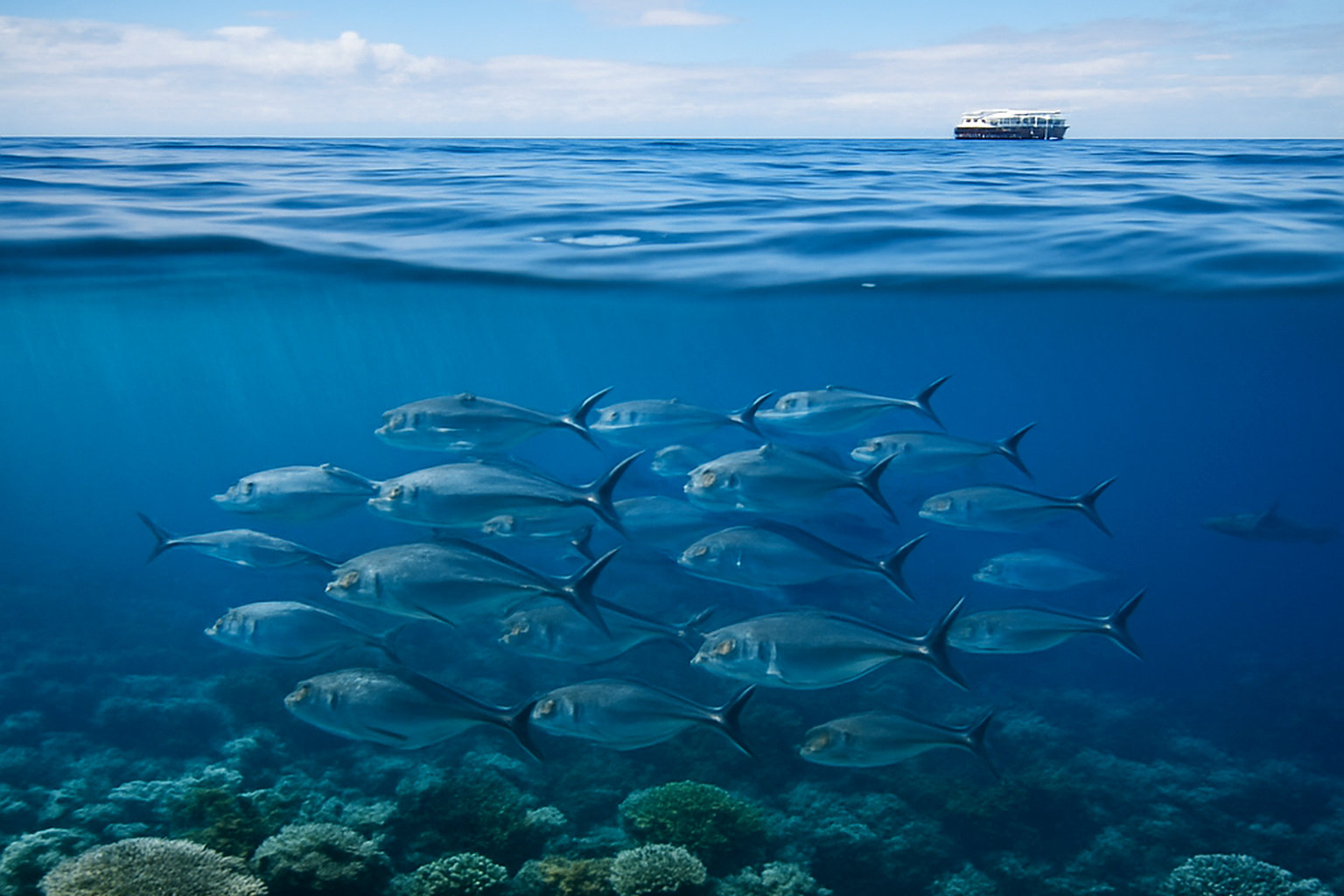
The wildlife does the rest. Sea turtles are close to routine on the shallows. Blacktip, whitetip and grey-reef sharks patrol the flats and the reef edges, scalloped hammerheads sweep through on the right tidal days, manta and eagle rays work the cleaning stations, and whale sharks occasionally cruise the channels — the park's open-water reputation, tiger sharks included, means any swim carries a background hum of possibility. And the jacks: huge, spinning schools of big-eyed jacks and trevally that gather along the shallow edges in numbers that have to be seen from in the water to be believed.
- A strictly protected UNESCO no-take park — roughly 97,000 hectares of it
- Around 600 fish species and some 360 coral species reported
- Sharks (tiger sharks included), sea turtles and huge schools of jacks
- Open-ocean clarity over shallow reef flats and lagoon edges
- A short, strictly limited season that keeps the water empty
Best sites to prioritize
Set expectations about what "sites" means aboard: the boat moves with the weather and the rangers' schedule, and the daily plan is the crew's, not yours. Within that, three areas anchor most trips. The North Atoll's reef flats are the classic — shallow coral terraces with turtles grazing, reef sharks on patrol and jacks massing along the edges, all in the lee of the anchorage when the wind allows.
The South Atoll's sheltered side often holds the calmest water of a week: coral heads, sand and seagrass along the lagoon edge, easy snorkeling when conditions elsewhere are rough. And Jessie Beazley Reef, the park's small third component northwest of the atolls, is a shallow-topped seamount often visited on the crossing itself — a lonely patch of coral in open blue water where anything can pass by. Which of these you swim, and when, is decided day by day; several liveaboards brief a snorkel plan at the start of the trip and stick to it as closely as the sea allows.
When to go & conditions
The season is the story. Tubbataha is open to visitors only from roughly mid-March to mid-June — about ten weeks — when the Sulu Sea is at its calmest and the park's rangers are on station. Outside that window there is no trip at all; the boats leave, the rangers pull off, and the reef gets its year to itself. Liveaboards publish their season schedules many months ahead, and the small fleet fills accordingly.
Inside the window, conditions are the Sulu Sea's calm-season version: warm tropical water, long sight lines on settled days — visibility is often 20 to 40 metres — and real swell exposure when the wind turns. These are ocean atolls with nothing between them and the horizon: North and South Atoll plus Jessie Beazley sit alone in deep water roughly 150 kilometres southeast of Puerto Princesa. Snorkeling runs on the crew's call: sessions happen in the lee, when the surface is workable, and a day's plan can change by the hour. That is not a defect of the trip; it is the deal you make to snorkel one of the healthiest reefs in the Coral Triangle.
Practical tips
Book the boat months ahead — genuinely months, not weeks. The park's season is roughly ten weeks long, the liveaboard fleet is small, and several boats that welcome snorkelers fill their berths as soon as the season opens for sale. Ask any operator three questions before you pay: how many snorkel sessions a typical week includes, whether a snorkeler can join the tender runs while the divers are down, and what the park-fee arrangements cover. Any operator who runs snorkelers to Tubbataha will answer all three without hesitation.
Be honest about what the trip asks of you. This is open-ocean snorkeling: currents run hard at the atoll tips, the walls fall away steeply, and the boat anchors in water that is often 30 metres deep or more — you need to be a confident open-water swimmer, comfortable in deep water with some current and happy getting in and out by tender. The crew will match sites to conditions and to you, and there are calmer drift options, but the expedition framing is not negotiable. If snorkeling is new to you, start on Palawan's shore reefs and lagoons and treat Tubbataha as a goal to grow into.
Pack as if the reef cannot sell you anything, because it cannot: there are no facilities on the atolls at all — no shop, no fresh-water station, no medical post. Bring your own mask, snorkel and fins, reef-safe sunscreen, a rashguard or thin wetsuit top for long sessions, seasickness remedies for the 10–12 hour crossing, and any personal medication in a full-trip supply. Your insurance needs to cover emergency medical evacuation by sea and air — the nearest major medical facilities are in Puerto Princesa, hours away by boat.
Keep off the reef. A no-take park stays that way because the people on it respect it: never touch or stand on coral, give turtles and sharks their space, follow the crew's briefing on currents and tender protocol, and take everything back to the boat with you. Entry rules, park fees and the rangers' site rules are part of the trip — treat them as the frame around the best shallow reef you are likely to see in the Philippines.
Book your Tubbataha Reefs snorkeling
Every button opens one of our booking partners live — tours on Viator, flights on Aviasales, hotels on Booking.com — where you set your own dates and see current prices and availability.
Affiliate links — we may earn a commission at no extra cost to you. No prices are shown here: each partner's live site shows prices and availability for your dates.
Planning this trip?
Get the whole journey built end-to-end — flights, stays, boat days, gear and day-by-day timing notes — by the Double Fathom Concierge for a one-time $29. Re-plan any time, chat support through the trip, a destination-specific packing list, curated off-menu operators, and a printable offline PDF itinerary.
Secure checkout by Stripe — pay by card, receipt by email. A one-time, per-trip purchase — nothing recurring, and no rush either way.
Get the occasional best-reef dispatch
Trip-planning tips, seasonal reef picks and new-destination notes. No spam, unsubscribe anytime.
Explore the destination
Know what you're signing up for. Tubbataha Reefs Natural Park is a roughly 97,000-hectare no-take UNESCO World Heritage site in the middle of the Sulu Sea — two atolls and the Jessie Beazley Reef, with something like 600 fish species and around 360 coral species reported, and a reputation built on sharks (tiger sharks among them), sea turtles and huge schools of jacks. It is liveaboard-only: the crossing from Puerto Princesa on Palawan runs roughly 10–12 hours each way, the park is open only roughly mid-March to mid-June, and several of the permitted liveaboards welcome snorkelers. Read the framing first: the celebrated walls drop well past snorkel depth and the surface water is open ocean, so what a snorkeler gets is the shallow reef flats and lagoon edges on the boat's schedule, with the crew deciding each day where the water is workable.
Tubbataha Reefs destination guide →