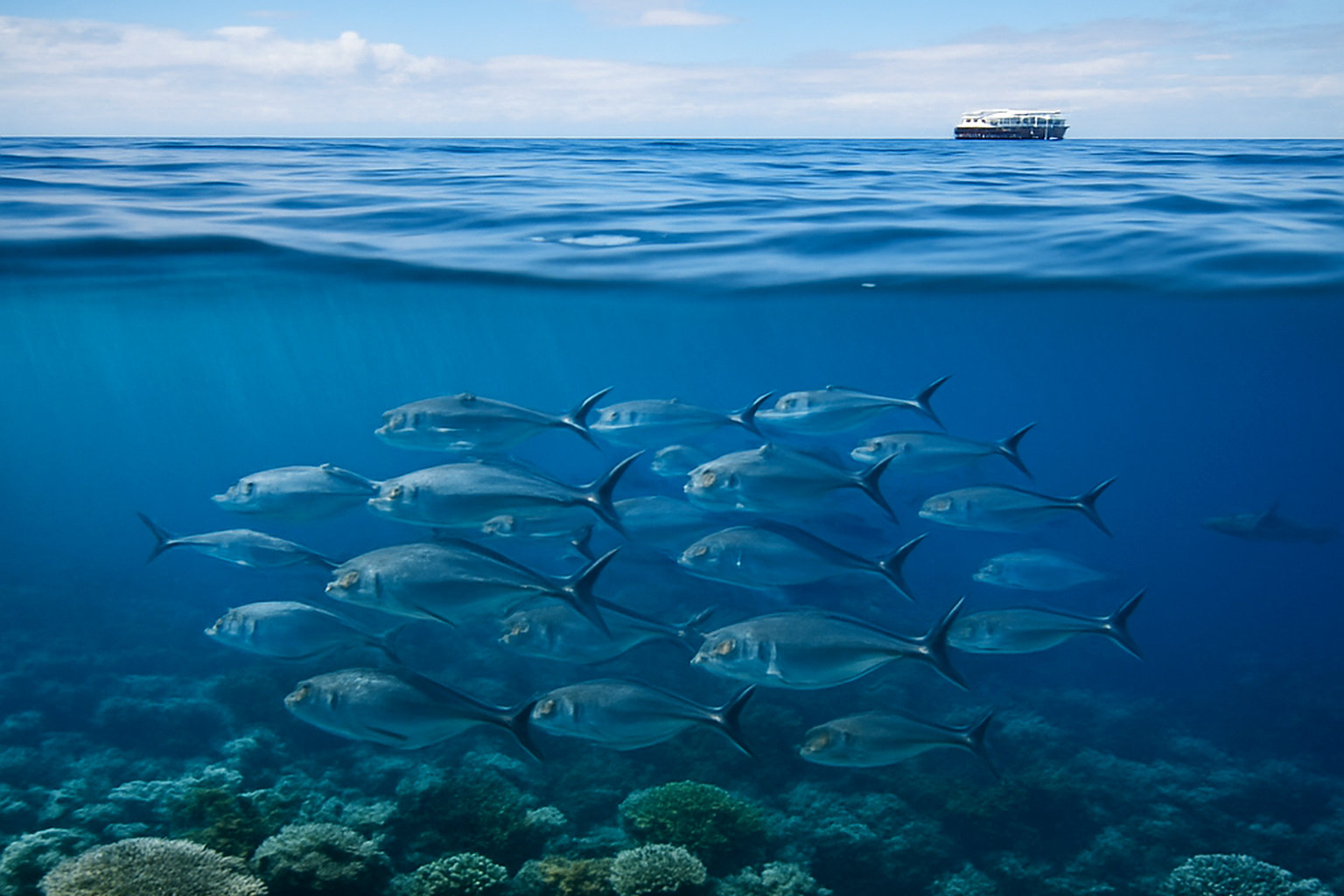
The distinctive underwater sights worth planning around. Descriptions are curated planning info — always verify local access, rules and conditions before you set out.
01
North Atoll reef flats
Reef📍 Tubbataha Reefs Natural Park, Sulu Sea
The shallower flats and lagoon edges of the North Atoll: dense hard-coral cover in strikingly clear open-ocean water, with turtles grazing, blacktip and whitetip reef sharks patrolling, and schools of jacks massing along the shallow edges. Liveaboards anchor in the lee and run snorkel sessions when the crew judges the surface workable.
Open-ocean water, not a sheltered bay: sessions happen in the lee of the atoll and only when conditions allow, so some days the water stays off-limits. The famous walls drop far past snorkel depth — much of the atoll's fish life lives down there, visible on the surface only as hints.
02
South Atoll lagoon and shallows
Lagoon📍 South Atoll, Tubbataha Reefs Natural Park
The South Atoll's sheltered side, where the shallow interior edges can offer the calmest water of a trip: coral heads, seagrass patches and sand, with turtles common and reef sharks passing through. When the wind is up elsewhere, this is often where the boat puts the snorkelers in.
Calm is relative out here — the South Atoll is still an ocean atoll, and access depends entirely on the day's weather and the boat's plan. Confirm with the operator how much of a week is typically snorkelable before you book.
03
Jessie Beazley Reef
Reef📍 Northwest of the Tubbataha atolls, Sulu Sea
The park's third and smallest component: a small shallow-topped reef northwest of the two atolls, often visited as a weather-window stop on the crossing. Shallow coral on a deep-ocean seamount, with pelagics possible at any moment in the blue water just off the edge.
A small target in open ocean — liveaboards stop here only when the crossing's timing and sea state cooperate, so treat it as a possible bonus rather than a promised site.
04
The no-take park itself
Marine reserve📍 Tubbataha Reefs Natural Park, Sulu Sea
The park designation is the story: a strictly protected no-take marine reserve — UNESCO-listed since 1993 — that nobody extracts from and almost nobody visits, which is why the reef reads as close to a baseline as Southeast Asia offers. Access runs entirely through permitted liveaboards out of Puerto Princesa, with park fees built into the trip.
There are no facilities of any kind on the atolls — no shore station, no fresh water, no medical post. Everything the trip needs, including any emergency plan, lives on the boat. Book the boat months ahead: the season is roughly ten weeks long and the fleet is small.