
Best Snorkeling in the Sea of Cortez
6 min read · Field guide
The Sea of Cortez is the Pacific answer to the Caribbean's greatest hits — a UNESCO-recognized marine wilderness with the Gulf of California's only hard-coral reef at Cabo Pulmo, a year-round sea lion colony you can swim with at Los Islotes, and seasonal whale sharks in La Paz Bay. This is big-animal snorkeling at its best, and it is entirely different in character from the Caribbean side of Mexico.
Seasonal guidance, not a forecast — no live tide tables, weather or marine advisories here; check local conditions before you go.
Why the Sea of Cortez is great for snorkeling
The Sea of Cortez is the Pacific answer to the Caribbean's greatest hits — a UNESCO-recognized marine wilderness that Jacques Cousteau called the aquarium of the world. Its three headline experiences are all big-animal and all different in character: the Gulf of California's only hard-coral reef at Cabo Pulmo, a year-round sea lion colony you can swim with at Los Islotes, and seasonal whale sharks in La Paz Bay.
This is the Pacific side of Mexico, not the Caribbean side, and it belongs in any honest list of the world's finest snorkeling for that reason. Cabo Pulmo is a community-enforced marine park, the whale shark operation runs on a government permit system with capped numbers, and the sea lion colony follows national-park rules — so the encounters are regulated rather than opportunistic.
- Cabo Pulmo — the Gulf of California's only hard-coral reef
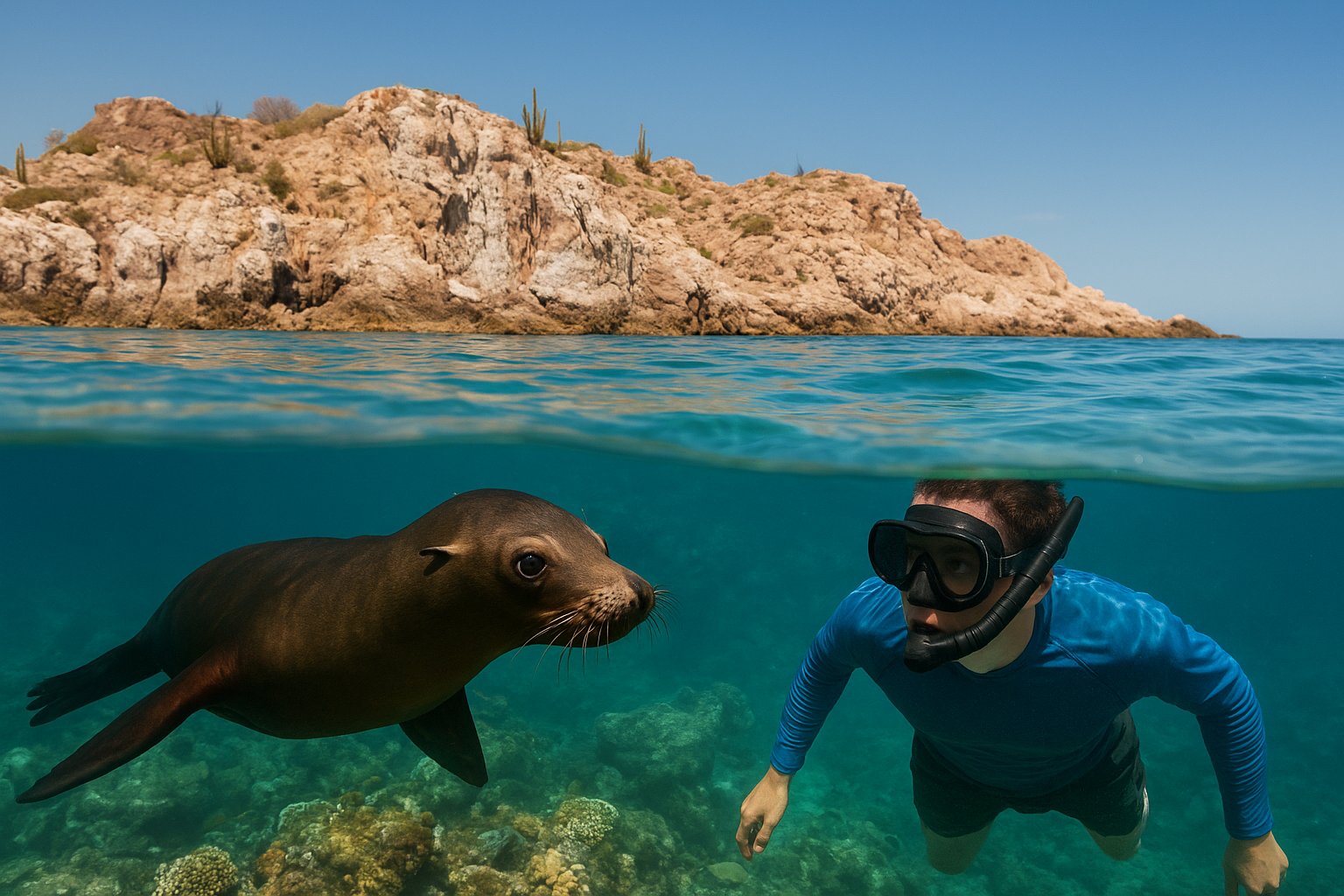
- Los Islotes — swim with a year-round colony of about 300 sea lions
- Whale sharks in La Paz Bay, October to April under a permit system
- A UNESCO-recognized marine wilderness on Mexico's Pacific coast
Best sites to prioritize
Cabo Pulmo National Park is the flagship: the only hard-coral reef in the Gulf of California and the northernmost coral reef on the Pacific side of North America, a community-enforced marine park since the 1990s with schooling jacks, groupers, turtles, mobula and eagle rays. You can snorkel straight from shore at Los Arbolitos, about 5 km south of town; a park bracelet fee funds conservation, and no-touch rules and reef-safe sunscreen are enforced.
Los Islotes, at the northern tip of Espíritu Santo near La Paz, is where you swim with a year-round colony of about 300 California sea lions. It is roughly 1–1.5 hours by boat from La Paz, and juveniles circle and blow bubbles around snorkelers. Water access is closed from June 1 to August 31 for pup-birthing season under SEMARNAT rules. Depth is 5–8 m with a mild current, life jackets are mandatory, and tours follow CONANP rules.
The whale sharks of La Paz Bay are the third headline, and they are seasonal: you snorkel with the world's largest fish in the protected Mogote zone just offshore, under a CONANP permit system with daily time slots and capped swimmers, for about two hours on the water. The official season runs October 1 to April 30, peaking November to April — regulated and reliable, unlike opportunistic sightings elsewhere.
When to go & conditions
October to November is the sweet spot: warm water in the mid-20s, whale shark season opening, the sea lion colony open, and fall clarity building at Cabo Pulmo. December to February brings cooler water, roughly 19–21°C, which is wetsuit territory, but calm seas from October to May, the best underwater visibility and humpbacks offshore; norte winds can cancel some boat days, so build in a buffer day. March to May is a good shoulder season, with warming water, whale sharks still around through April, sea lions open and calmer mornings.
June to September brings the warmest water, up to about 29–30°C in September, and peak marine diversity — but with hurricane risk, especially in September, plankton blooms that can reduce visibility, and Los Islotes closed to in-water sea lion encounters from June to August. Summer is also the whale-shark off-season.
The seasonal swing here is bigger than on the Caribbean side: roughly 19–21°C in the coolest months of January to March, so a 3–5 mm wetsuit earns its place in winter, warming to bath-like 27–30°C by August and September when a rash guard is plenty. La Paz Bay and Espíritu Santo commonly give clear, calm snorkeling from October through May, and winter north winds can stir things up for a day or two. Cabo Pulmo runs clearest roughly September to November. Los Islotes sits in 5–8 m with generally mild current and the boat stays close, but this is open-water snorkeling rather than a lagoon, so comfort in the water matters and life jackets are mandatory at the colony. Cabo Pulmo's shore sites are easy, and a few offshore spots carry mild current your guide will brief you on.
Practical tips
Fly into La Paz International Airport (LAP), the closest airport to the sea lion and whale shark departures, with marinas on the malecón. Los Cabos International (SJD) is the alternative with more international flights, and whale shark day-trips run from Los Cabos to La Paz in about 2–2.5 hours each way by road. Cabo Pulmo is about 1.5 hours from San José del Cabo, two hours from Cabo San Lucas and three hours from La Paz; the last stretch is unpaved desert road, so top up fuel and carry water. Staying in the village itself gives you dawn shore-snorkeling at Los Arbolitos. Espíritu Santo and Los Islotes tours leave from the La Paz marinas, typically at 8:30 AM for a full day, and whale shark boats work the Mogote zone 10–30 minutes offshore.
On entry, US, Canadian, UK, EU, Australian, Japanese, Korean and other visa-exempt nationalities need no visa for tourist stays — Mexican immigration grants up to 180 days at the officer's discretion. Everyone completes the FMM tourist entry form, which is handled at immigration on arrival for roughly US$30–55 equivalent, usually bundled into the airfare; the passport must be valid for the whole stay, though Mexico does not require a six-month buffer and airlines may apply their own rules. Carry proof of onward travel and accommodation. The currency is the Mexican peso (MXN): cards are widely accepted in La Paz and Los Cabos, but carry pesos in cash for park fees, dock fees of about US$3–5, crew tips and small vendors in Cabo Pulmo village. Spanish is the language, widely spoken by tour operators and at resorts, and thinner in Cabo Pulmo village, where basic Spanish helps.
On safety and wildlife, swim only with licensed CONANP-permitted operators, never touch, feed or chase wildlife, and keep clear of haul-out rocks and bulls, especially near pup season — juveniles may nip fins, and guides brief and supervise every entry. Hospital General Juan María de Salvatierra on Avenida de los Deportistas in La Paz is the state general hospital, and the emergency number is 911 nationwide. Dive and medical-evacuation travel insurance is strongly advised for a remote-coast trip, and you should ask operators about emergency oxygen. No decompression chamber in La Paz could be confirmed. Cell coverage is good in La Paz and Los Cabos and patchy on the road to Cabo Pulmo, so download offline maps. Travel-admin facts for this destination are in the Concierge panel on the destination page.
Book your Sea of Cortez, Mexico snorkeling
Every button opens one of our booking partners live — tours on Viator, flights on Aviasales, hotels on Booking.com — where you set your own dates and see current prices and availability.
Affiliate links — we may earn a commission at no extra cost to you. No prices are shown here: each partner's live site shows prices and availability for your dates.
Planning this trip?
Get the whole journey built end-to-end — flights, stays, boat days, gear and day-by-day timing notes — by the Double Fathom Concierge for a one-time $29. Re-plan any time, chat support through the trip, a destination-specific packing list, curated off-menu operators, and a printable offline PDF itinerary.
Secure checkout by Stripe — pay by card, receipt by email. A one-time, per-trip purchase — nothing recurring, and no rush either way.
Get the occasional best-reef dispatch
Trip-planning tips, seasonal reef picks and new-destination notes. No spam, unsubscribe anytime.
Explore the destination
The Sea of Cortez is the Pacific answer to the Caribbean’s greatest hits — a UNESCO-recognised marine wilderness with the Gulf of California’s only hard-coral reef at Cabo Pulmo, a year-round sea lion colony you can swim with at Los Islotes, and seasonal whale sharks in La Paz Bay. This is big-animal snorkeling at its best, and it is entirely different in character from Double Fathom’s Cozumel entry: this is the Pacific side of Mexico — Baja California Sur, Jacques Cousteau’s "aquarium of the world" — not the Caribbean reef island. Expect a real seasonal swing (roughly 19–21°C in winter, wetsuit territory, up to about 29–30°C by September) and note that Los Islotes is closed to in-water sea lion encounters from June to August.
Sea of Cortez, Mexico destination guide →