24Double Fathom ranking
The aquarium of the world
Best for
The Sea of Cortez is the Pacific answer to the Caribbean’s greatest hits — a UNESCO-recognised marine wilderness with the Gulf of California’s only hard-coral reef at Cabo Pulmo, a year-round sea lion colony you can swim with at Los Islotes, and seasonal whale sharks in La Paz Bay. This is big-animal snorkeling at its best, and it is entirely different in character from Double Fathom’s Cozumel entry: this is the Pacific side of Mexico — Baja California Sur, Jacques Cousteau’s "aquarium of the world" — not the Caribbean reef island. Expect a real seasonal swing (roughly 19–21°C in winter, wetsuit territory, up to about 29–30°C by September) and note that Los Islotes is closed to in-water sea lion encounters from June to August.
Whale sharks · Sea lions · Hard coral
Key sites to explore
The distinctive underwater sights worth planning around. Descriptions are curated planning info — always verify local access, rules and conditions before you set out.
01
Cabo Pulmo National Park
Reef📍 Cabo Pulmo, Baja California Sur, Mexico
The flagship: the only hard-coral reef in the Gulf of California and the northernmost coral reef on the Pacific side of North America, protected by a community-enforced marine park since the 1990s, with schooling jacks, groupers, turtles, mobula and eagle rays.
Snorkel straight from shore at Los Arbolitos, about 5 km south of the village. A park bracelet fee funds conservation, and no-touch rules and reef-safe sunscreen are enforced — verify current fees and rules locally. The last stretch of road in is unpaved: top up fuel and carry water.
02
Los Islotes sea lions, Espíritu Santo
Megafauna point📍 Northern tip of Espíritu Santo, roughly 1–1.5 hours by boat from La Paz
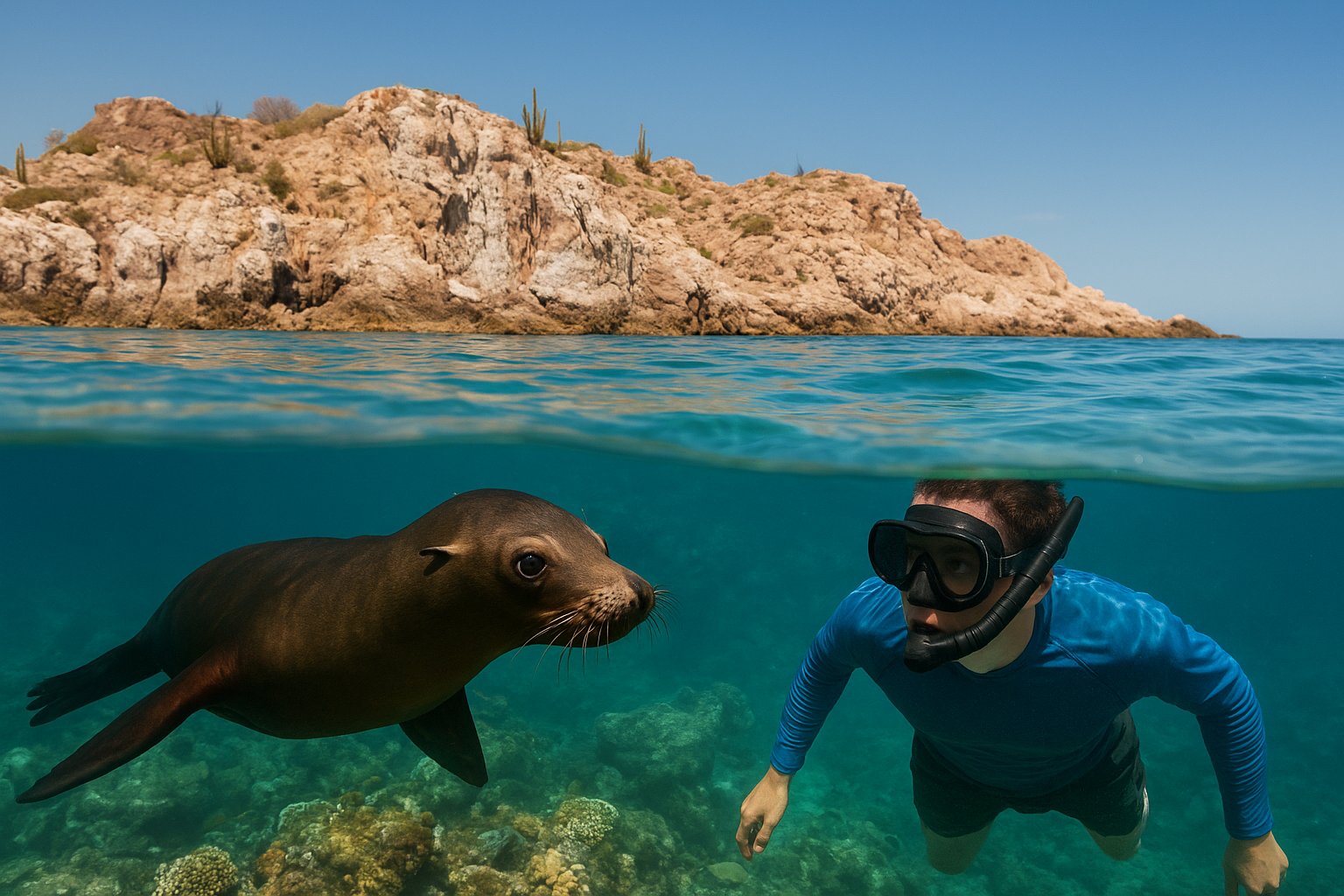
Swim with a year-round colony of around 300 California sea lions. Juveniles circle and blow bubbles around snorkelers, in 5–8 m of water with mild current.
In-water access is closed from June 1 to August 31 for the sea lions’ pup-birthing season (SEMARNAT), life jackets are mandatory, and tours follow CONANP rules — go only with a licensed CONANP-permitted operator, and keep clear of haul-out rocks and bulls.
03
Whale sharks, La Paz Bay (seasonal)
Megafauna point📍 The protected Mogote zone just offshore from La Paz, Baja California Sur
Snorkel with the world’s largest fish in the protected Mogote zone, under a CONANP permit system with daily time slots and capped swimmer numbers — roughly 2 hours on the water. The official season runs October 1 to April 30, peaking November–April, and it is regulated and reliable rather than opportunistic.
Seasonal by permit, not by chance: the season runs October 1 to April 30 and daily slots are capped, so book ahead. Never touch, feed or chase — guides brief and supervise every entry.
Snorkeling in Sea of Cortez, Mexico: quick answers
- Is the Sea of Cortez the same as Cozumel?
- No — they are different coasts and different trips. Cozumel is the Caribbean side of Mexico; the Sea of Cortez, the Gulf of California, is the Pacific side, in Baja California Sur, and it is a UNESCO-recognised marine wilderness in its own right. The character here is large animals rather than a coral garden: the gulf's only hard-coral reef at Cabo Pulmo, a year-round sea lion colony at Los Islotes, and seasonal whale sharks in La Paz Bay.
- When can you swim with the sea lions and the whale sharks?
- The sea lions at Los Islotes are a year-round colony, but in-water encounters are closed roughly June to August for the pup-birthing season, so plan around that closed window if the colony is the point of the trip. Whale sharks are seasonal and regulated: the official season runs roughly October to April, peaking November to April, under a permit system with fixed daily time slots and capped swimmer numbers. Both are wild animals, so sightings are never guaranteed, and both visits run only with licensed, permit-holding operators who brief every entry.
Tours & excursions
Affiliate links — we may earn a commission at no extra cost to you.
Where to stay
A live Booking.com search for Sea of Cortez, Mexico — the search box is already filled in, so what opens is the destination's own hotel list. We don't print hotel rates — they move with dates and season, so the rates and availability for your dates are shown on Booking.com, not here.
Affiliate links — we may earn a commission at no extra cost to you. No hotel prices are shown or guaranteed: the Booking.com search opens live, and the rates and availability for your dates are shown there.
Getting there: flights to La Paz (LAP)
We don't print airfares — they move daily, so any “from” figure would be stale before you booked. This opens a live Aviasales search for La Paz (LAP), pre-filled from Los Angeles (LAX) with example dates in January 2027. Set your own departure city and dates on Aviasales; the fares, routing and currency are live there, not here.
La Paz International (LAP) is the closest airport to the sea lion and whale shark departures, with marinas on the malecón. Los Cabos (SJD) is the bigger international alternative with more flights, and whale shark day-trips run from Los Cabos to La Paz in about 2–2.5 hours each way by road.
Affiliate link — we may earn a commission at no extra cost to you. No flight prices are shown or guaranteed: fares change constantly, so the search opens live instead. The example date and departure city are just a starting point.
Planning Sea of Cortez, Mexico?
Get the whole journey built end-to-end — flights, stays, boat days, gear and day-by-day timing notes — by the Double Fathom Concierge for a one-time $29. Re-plan any time, chat support through the trip, a destination-specific packing list, curated off-menu operators, and a printable offline PDF itinerary.
Secure checkout by Stripe — pay by card, receipt by email. A one-time, per-trip purchase — nothing recurring, and no rush either way.