Caribbean & Atlantic
Best time to snorkel in Guadeloupe
The seasonal pattern for Guadeloupe — what each stretch of the year tends to bring, and what to plan around. Guidance, not a forecast.
Seasonal pattern, not a forecast — conditions vary; verify tides, weather and visibility locally before you go.
The seasonal pattern
The dry season, roughly January to April, is the sweet spot: the year's most comfortable air and, for snorkeling, the cleanest water on Basse-Terre's west coast, because visibility there depends on what washes off the rainforest volcano — the dry months run clear, with water around 27–28°C and a rash guard plenty. December and early January bring those same conditions with holiday crowds and prices. Roughly May to June is the shoulder: warmer, quieter, occasional showers and still good snorkeling before the rains settle in. From roughly June to November it is the wet and hurricane season — the season peaks around 10 September and even a non-hurricane system can kill a week — with peak coral heat stress and the murkiest water landing roughly late October to mid-November, so a snorkel-first trip belongs in the dry half of the year.
When to snorkel Guadeloupe: quick answer
- When is the best time to snorkel Guadeloupe?
- The dry season, roughly January to April, is the sweet spot: the year's most comfortable air and, for snorkeling, the cleanest water on Basse-Terre's west coast, because visibility there depends on what washes off the rainforest volcano — the dry months run clear, with water around 27–28°C and a rash guard plenty. December and early January bring the same conditions with holiday crowds and prices. Roughly May to June is the warmer, quieter shoulder with occasional showers and still good snorkeling. From roughly June to November it is the wet and hurricane season, peaking around 10 September, with the murkiest water and the highest coral heat stress landing roughly late October to mid-November.
What you’d be snorkeling
The key sites on Guadeloupe’s destination page — the water this season is about.
- Réserve Cousteau / Pigeon Islands (Îlets Pigeon)Marine reserve
📍 Off Malendure, Bouillante, Basse-Terre, Guadeloupe
- Petite-TerreMarine reserve
📍 Off Saint-François, Grande-Terre, Guadeloupe
- Les Saintes (Terre-de-Haut), around Pain de SucreReef
📍 Terre-de-Haut, Les Saintes, Guadeloupe
Live conditions decide the day, not this page — check the local marine forecast and tide or water-level information for your dates before you go.
Opens tide-forecast.com in a new tab. We link out to it rather than quote conditions; it is not an affiliate link.
Go deeper on Guadeloupe
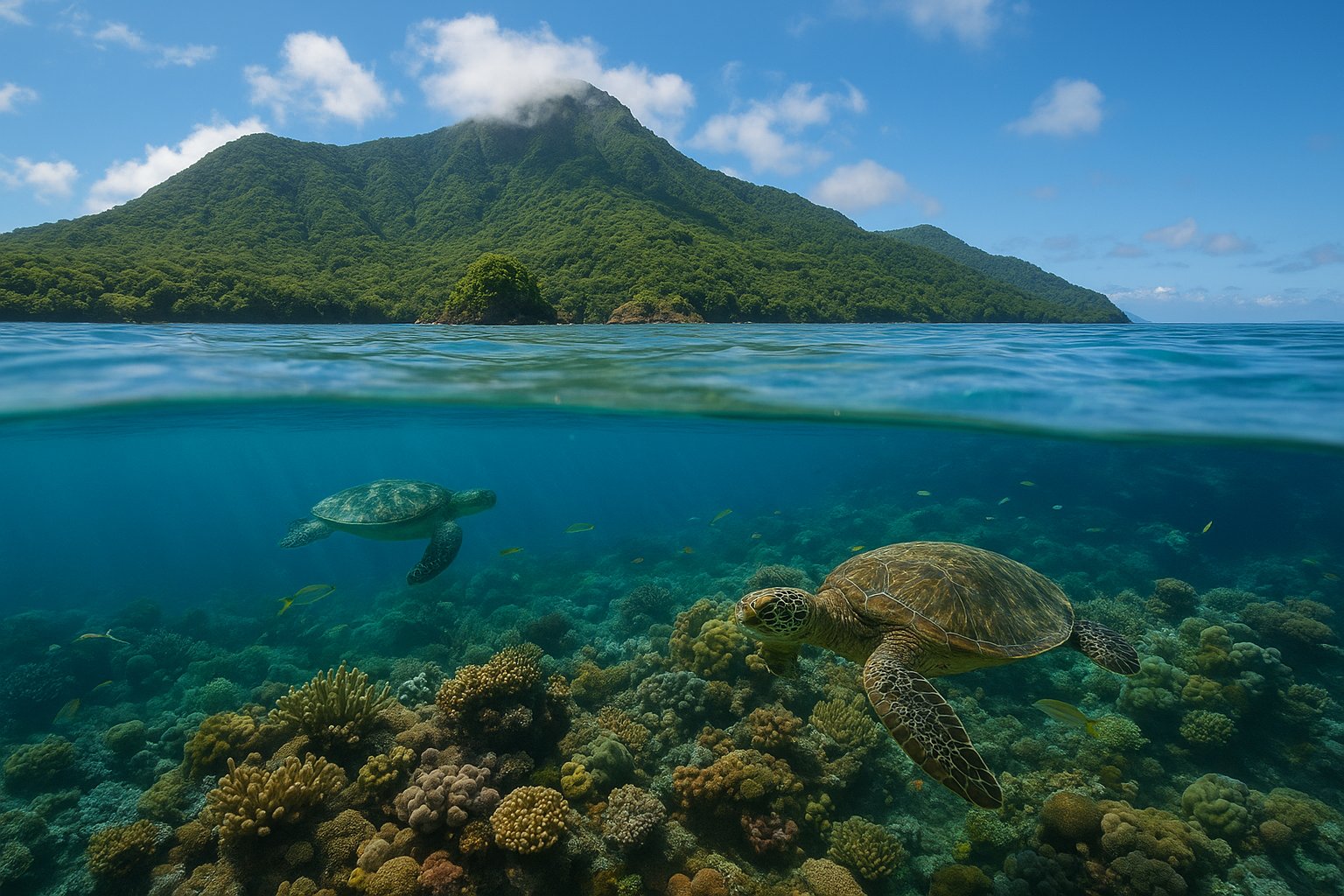
Guadeloupe is the French Caribbean’s snorkeling crown jewel: the Réserve Cousteau, the marine reserve Jacques Cousteau himself championed and filmed in, sits in gin-clear water off Basse-Terre’s volcanic west coast — green turtles grazing the shallows, tarpon patrolling the drop-offs, and Cousteau’s own statue resting on the seabed. It is Europe in the tropics (euros, French hospitals, EU standards) wrapped around genuinely world-class Caribbean reefs, plus the satellite islands — Petite-Terre and Les Saintes — that most visitors never reach. Go in the dry season: the cleanest west-coast water runs roughly January to April, and June to November is hurricane season.
Planning Guadeloupe around a season?
Get the whole journey assembled — boat days, gear and day-by-day timing notes, with flights and stays linked through our booking partners — by the Double Fathom Concierge for a one-time $29. Re-plan any time, chat support through the trip, a destination-specific packing list, curated off-menu operators, and a printable offline itinerary PDF.
Secure checkout by Stripe — pay by card, receipt by email. A one-time, per-trip purchase — nothing recurring, and no rush either way.