
Best Snorkeling in Yap
6 min read · Field guide
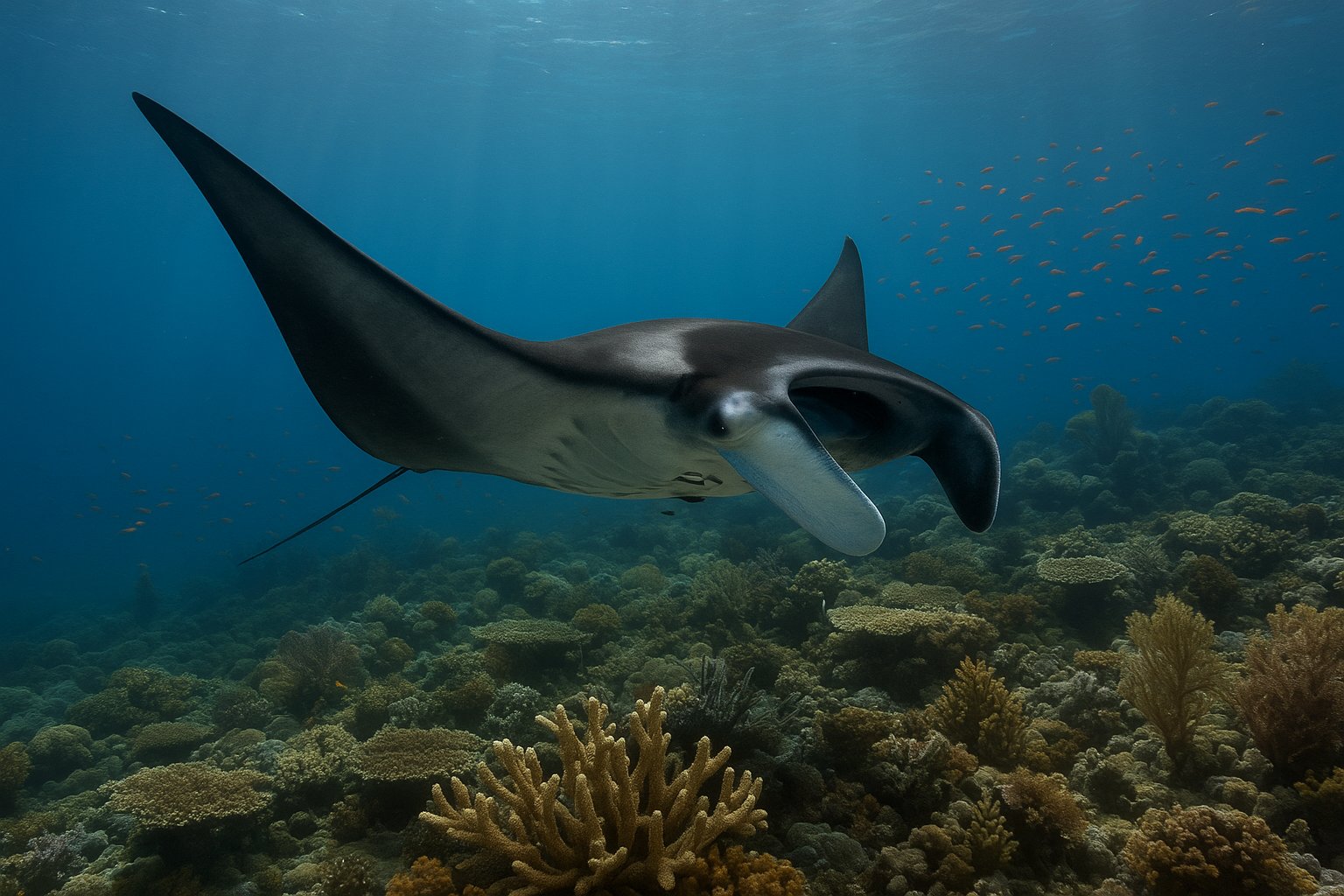
Yap is where you go to snorkel with manta rays — not chase them, snorkel with them. A resident reef-manta population of more than 100 identified individuals works shallow cleaning stations in Manta Ray Bay year-round, inside the world's first manta ray sanctuary, and the sites are shallow enough that snorkelers share the encounters divers get. Beyond the mantas: pristine coral walls, 30 m-plus visibility, and an island that sees roughly a thousand divers a year.
Seasonal guidance, not a forecast — no live tide tables, weather or marine advisories here; check local conditions before you go.
Why Yap is great for snorkeling
Yap is the one place where snorkeling with manta rays is the headline rather than a lucky extra. A resident reef-manta population — more than 100 identified individuals — works shallow cleaning stations in Manta Ray Bay year-round, inside the world's first manta ray sanctuary, established in 2008. The sites are shallow enough that snorkelers share the encounters divers get, hovering in 5–7 m of water while wrasse and butterflyfish pick the mantas clean.
Beyond the mantas there are pristine coral walls and 30 m-plus visibility, and an island that sees roughly a thousand divers a year — by design. This is the opposite of crowded, and it is why the encounters feel unhurried: you are not queuing behind a dozen other boats for a mantas' attention.
- More than 100 identified resident reef mantas
- The world's first manta ray sanctuary, established 2008
- Cleaning stations shallow enough to snorkel — 5–7 m of water
- Roughly a thousand divers a year, so the sites stay uncrowded
Best sites to prioritize
The manta cleaning stations — Stammtisch, Mi'il and Goofnuw Channels — are the reason to come. Reef mantas (Mobula alfredi, wingspans up to about 4.5 m) hover at the stations in 5–7 m of water while wrasse and butterflyfish pick them clean, shallow enough for long, relaxed snorkel sessions. They are present year-round, and mating season (December–April) brings the famous courtship "dance" and bigger aggregations.
Yap Caverns is a maze of coral canyons maxing out around 18 m, with a light current, visibility often 30 m-plus and sun shafts lighting up soft-coral walls. Sharks, turtles and schooling jacks patrol it, and the shallower sections are snorkel-friendly on calm days.
Then there are the outer reef walls — Lionfish Wall and the Yap Corner shallows among them. Steep walls drop away from about 5 m, carpeted in daisy corals and crinoids, with eagle rays, turtles and patrolling reef sharks out in the blue. When conditions are calm, the top of the wall sits in easy snorkel range.
When to go & conditions
December to April is manta mating season and high season: the densest manta congregations and courtship behaviour, in the cooler, drier trade-wind months. This is the window to target. November to May is the broader good-conditions window, with mantas present throughout, though exposed sides can get choppy.
June to October is wetter and calmer between blows, and is reportedly the better window for dolphin and pilot whale encounters — the mantas stay resident. Water temperature barely moves all year, around 27–28°C, so "best month" here is about mantas and sea state rather than warmth.
Visibility is often superb: commonly 20–30 m and beyond on the outer reefs, with some walls reaching past 45 m on the best days. The manta channels swing with the tide — incoming ocean water brings the clearest conditions and outgoing tides can cloud things quickly — which is exactly why you go with a guide here, timed to the incoming tide for both visibility and manageable flow. Outside the channels, most snorkel zones are sheltered lagoon and reef flats with mild conditions.
Practical tips
Fly to Yap International Airport (YAP) via Guam. United operates Guam to Yap (UA185/UA186) twice weekly — Tuesdays and Saturdays — in about 1 hour 15 minutes each way. The frequencies shift, so re-check the schedule when booking. Yap is not on United's main Island Hopper route (Honolulu–Majuro–Kwajalein–Kosrae–Pohnpei–Chuuk–Guam); it is served by these separate Guam flights, and most itineraries route via Guam, which also makes a natural stopover. With only two flights a week, trip length is effectively dictated by the schedule — 7, 10 or 14-night stays are the norm. Resorts offer airport transfers.
The currency is the US dollar. The main resorts take Visa, Mastercard and Amex, but Yap is cash territory beyond that, so bring enough USD and do not count on ATMs — current ATM availability could not be confirmed from a source. A departure fee of about $20 per state is payable in cash at the airport. English is an official language of the FSM and widely used in tourism, with Yapese the local language; cultural respect matters here, so dress modestly in villages (no shorts away from the beaches) and always ask before photographing people.
On health, be honest rather than alarmed: Yap has a state hospital in Colonia plus community health centers, but this is basic-care territory — limited diagnostics, limited specialists, and serious cases are evacuated, typically to Guam or beyond. No decompression chamber on Yap could be confirmed, so dive and medical-evacuation insurance is strongly advised, and you should ask your operator directly about emergency oxygen and evacuation plans. Connectivity is resort Wi-Fi rather than reliable mobile data everywhere, so download offline maps and essentials before arrival. Travel-admin facts for this destination — entry, the hospital and the emergency numbers — are in the Concierge panel on the destination page.
Book your Yap, Micronesia snorkeling
Every button opens one of our booking partners live — tours on Viator, flights on Aviasales, hotels on Booking.com — where you set your own dates and see current prices and availability.
Affiliate links — we may earn a commission at no extra cost to you. No prices are shown here: each partner's live site shows prices and availability for your dates.
Planning this trip?
Get the whole journey built end-to-end — flights, stays, boat days, gear and day-by-day timing notes — by the Double Fathom Concierge for a one-time $29. Re-plan any time, chat support through the trip, a destination-specific packing list, curated off-menu operators, and a printable offline PDF itinerary.
Secure checkout by Stripe — pay by card, receipt by email. A one-time, per-trip purchase — nothing recurring, and no rush either way.
Get the occasional best-reef dispatch
Trip-planning tips, seasonal reef picks and new-destination notes. No spam, unsubscribe anytime.
Explore the destination
Yap is where you go to snorkel with manta rays — not chase them, snorkel with them. A resident reef-manta population of 100+ identified individuals works shallow cleaning stations in Manta Ray Bay year-round, in the world’s first manta ray sanctuary (established 2008), and the sites are shallow enough that snorkelers share the encounters divers get. Beyond the mantas: pristine coral walls, 30 m+ visibility, and an island that sees roughly a thousand divers a year — the opposite of crowded. Getting here shapes the trip: Yap is served by two Guam flights a week, so stays run 7, 10 or 14 nights.
Yap, Micronesia destination guide →