
Best Snorkeling in Tonga
6 min read · Field guide
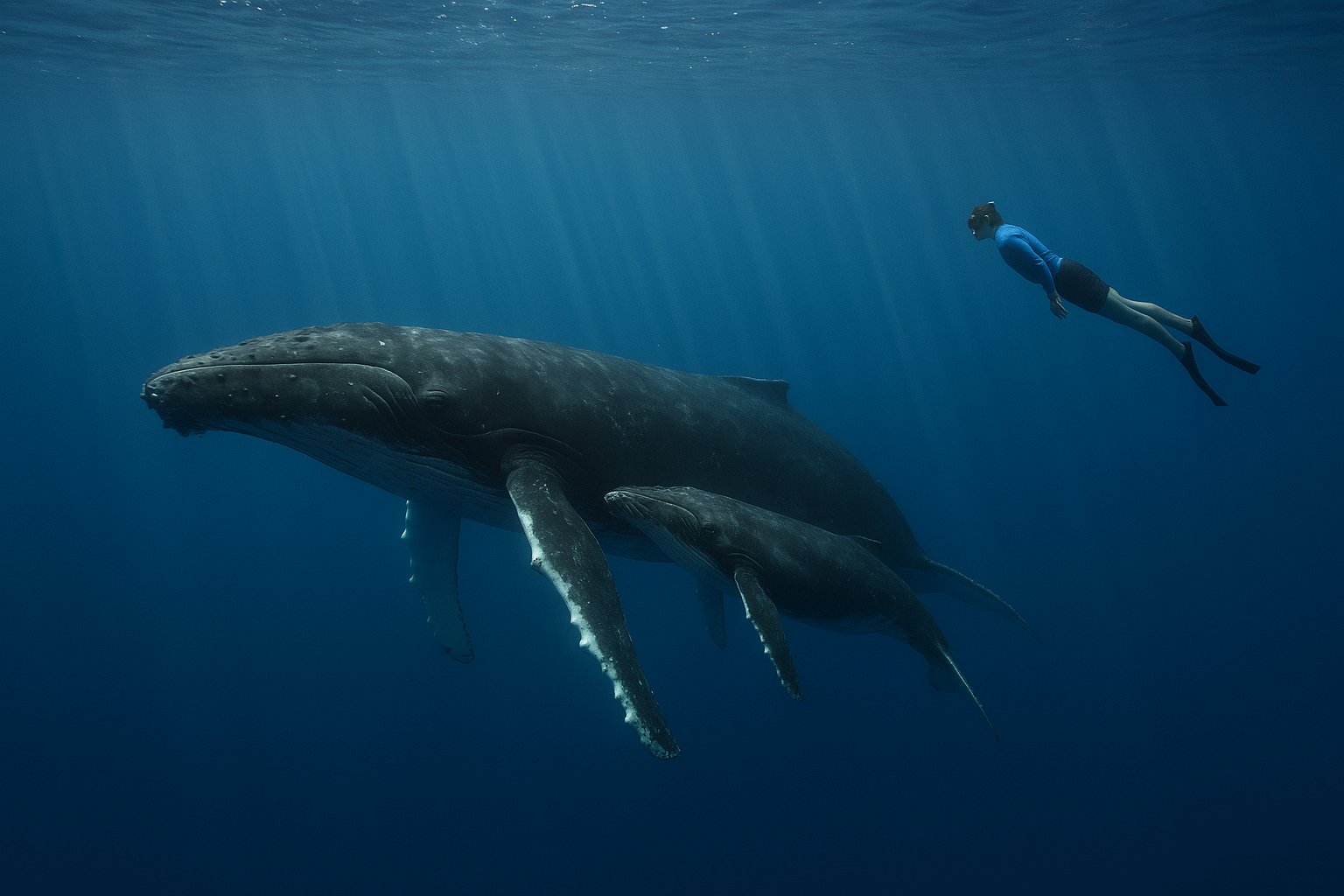
Tonga is one of a tiny handful of countries on Earth where you can legally slip into the water with humpback whales, and it does it under strict, genuinely conservation-minded licensing. Every austral winter the whales come to Vava'u's sheltered channels to calve, and from July to October small guided groups snorkel beside mothers and newborns in warm, clear water. Underneath the headline act, Vava'u's maze of islands holds sea caves and coral gardens that are lightly visited and uncrowded.
Seasonal guidance, not a forecast — no live tide tables, weather or marine advisories here; check local conditions before you go.
Why Tonga is great for snorkeling
Tonga is one of a tiny handful of countries on Earth where you can legally slip into the water with humpback whales — and it does it under strict, genuinely conservation-minded licensing rather than as an anything-goes thrill. Every austral winter the whales come to Vava'u's sheltered channels to calve, and from July to October small guided groups snorkel beside mothers and newborns in warm, clear water. You snorkel, never chase; the whales set the terms.
Underneath the headline act, Vava'u's maze of protected islands holds sea caves and shallow coral gardens that are lightly visited and uncrowded. This is the Pacific as it used to be, and the licensing discipline is why it still feels that way.
- A licensed humpback whale swim, July to October
- A maximum of four swimmers plus a guide in the water at a time
- Swallows Cave — a light-filled sea cavern you snorkel into from the boat
- Sheltered, uncrowded coral gardens between Vava'u's protected islands
Best sites to prioritize
The Vava'u humpback whale swim, from July to October, is the reason to come. Licensed operators take a maximum of four swimmers plus a guide into the water with settled whales; you snorkel rather than chase, and the whales set the terms. Mothers with calves rest in the calm channels, and mid-season — August to September — is prime. Encounters are never guaranteed, and a responsible operator will tell you honestly when the whales are not settled.
Swallows Cave on Kapa Island is the signature Vava'u reef snorkel and the dramatic counterpoint to a whale-swim day: a light-filled sea cavern you snorkel straight into from the boat, alive with schooling fish.
The sheltered coral gardens — Vakaeitu, Port Maurelle and the Nuku Island sandbank — are easy, shallow hard-and-soft-coral gardens between Vava'u's protected islands, busy with reef fish, turtles and the occasional reef shark. The calm entries suit all levels, and Barefoot Manta's island is noted for close-to-shore manta encounters.
When to go & conditions
July to October is whale season and the only window for the whale swim: humpbacks are present roughly July through October, peaking in August and September when mothers rest with calves in the channels. It is also the cooler, drier season with the clearest water. Book operators and flights well ahead, and confirm with operators before locking flights — exact arrival and departure shifts year to year.
May to June and November are the reef shoulder: good reef snorkeling with warm water and decent visibility, but no whales. November edges into cyclone season, so watch forecasts. December to April is cyclone season: hot, humid, with rain squalls, and domestic flights and boat days get cancelled. It is not the window for a Tonga trip — if you must travel then, buy trip insurance covering weather disruption.
Water is warm year-round, roughly 24–28°C, and during whale season it sits around 25–26°C; with long boat days and repeated swims, many prefer a 3 mm top for comfort rather than need. The dry season (roughly May to October) brings the clearest water: Vava'u's sheltered channels are reliably clear, and nearby Ha'apai has reported 40 m-plus on calm days. Vava'u's maze of protected channels keeps currents mild at the reef sites, but the whale swims happen in open, deeper water — you need to be a confident open-water swimmer, and conditions vary, so listen to the guide's call on whether a swim goes ahead.
Practical tips
Fly into Fua'amotu International Airport (TBU) on Tongatapu. Direct international links run on Air New Zealand from Auckland, Fiji Airways from Nadi and Qantas from Sydney. From there you hop to Vava'u (VAV): domestic flights on Lulutai Airlines, Tonga's sole scheduled carrier, connect TBU with Vava'u, and Fiji Airways also serves VAV from Nadi. Vava'u's airport is about 10 km from Neiafu, the whale-swim base town. Confirm current timetables when booking — Lulutai's TBU–VAV schedule changes seasonally and has seen cancellations in heavy weather. Tonga is deeply Christian, so virtually everything closes on Sundays and there are no scheduled flights arriving or departing that day; plan connections around it.
Entry is generous: citizens of the US, UK, Canada, Australia, New Zealand, Japan and many others get a free 31-day visa on arrival, extendable to six months, while EU and Schengen nationals get 90 days. A passport valid 6+ months and a confirmed onward ticket are strictly required, and immigration is firm on the onward ticket. The currency is the Tongan pa'anga (TOP), and cash is still king outside the main resorts, with ATMs in Neiafu and Nuku'alofa. Tongan and English are both official, and English works fine in tourism.
Whale-swim rules matter for the listing: only licensed operators may put swimmers in the water, with a maximum of four swimmers plus a guide at a time; there is no touching and no chasing, the guide reads whale behaviour and calls off swims when animals are unsettled, and encounters are never guaranteed. Book licensed, small-group operators — cut-price rule-benders exist and should be avoided. On health, Prince Wellington Ngu Hospital in Neiafu, Vava'u, runs a 24-hour service with emergency, outpatient and dental departments, but facilities are basic by Western standards, so comprehensive travel and medical-evacuation insurance is strongly advised. No decompression chamber in Tonga could be confirmed. Connectivity is limited outside Neiafu and Nuku'alofa, with hotel wifi the norm — download offline maps before island-hopping. Travel-admin facts for this destination are in the Concierge panel on the destination page.
Book your Tonga snorkeling
Every button opens one of our booking partners live — tours on Viator, flights on Aviasales, hotels on Booking.com — where you set your own dates and see current prices and availability.
Affiliate links — we may earn a commission at no extra cost to you. No prices are shown here: each partner's live site shows prices and availability for your dates.
Planning this trip?
Get the whole journey built end-to-end — flights, stays, boat days, gear and day-by-day timing notes — by the Double Fathom Concierge for a one-time $29. Re-plan any time, chat support through the trip, a destination-specific packing list, curated off-menu operators, and a printable offline PDF itinerary.
Secure checkout by Stripe — pay by card, receipt by email. A one-time, per-trip purchase — nothing recurring, and no rush either way.
Get the occasional best-reef dispatch
Trip-planning tips, seasonal reef picks and new-destination notes. No spam, unsubscribe anytime.
Explore the destination
Tonga is one of a tiny handful of countries on Earth where you can legally slip into the water with humpback whales — and it does it under strict, genuinely conservation-minded licensing. Every austral winter the whales come to Vava’u’s sheltered channels to calve, and from July to October small guided groups snorkel beside mothers and newborns in warm, clear water. Underneath the headline act, Vava’u’s maze of islands holds sea caves and coral gardens that are lightly visited and uncrowded — this is the Pacific as it used to be. Plan around the calendar: December to April is cyclone season, when domestic flights and boat days get cancelled.
Tonga destination guide →