Best Snorkeling in New Caledonia
6 min read · Field guide
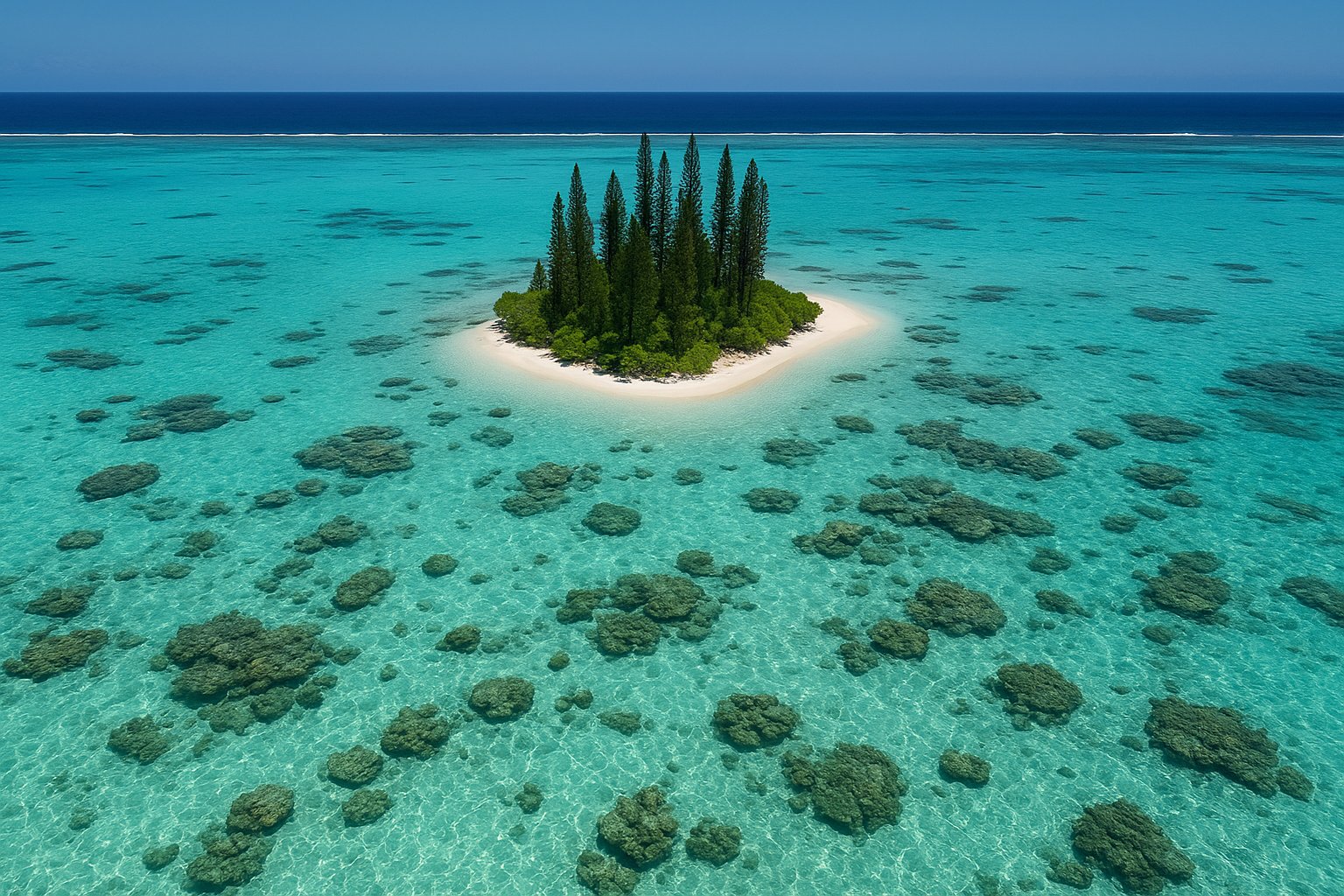
New Caledonia sits inside the largest enclosed lagoon on Earth — a 24,000 km² UNESCO World Heritage reef system — and its snorkeling is as good as anywhere in the Pacific, with far fewer crowds. Marine-reserve islets off Nouméa put turtles, sea snakes and Napoleon wrasse within a short boat ride, while the Isle of Pines' natural pool is one of the most photographed snorkels in the South Pacific. A French Pacific territory with easy connections from Australia and New Zealand, it is the rare world-class destination that still feels undiscovered.
Seasonal guidance, not a forecast — no live tide tables, weather or marine advisories here; check local conditions before you go.
Why New Caledonia is great for snorkeling
New Caledonia's lagoon is the largest enclosed one on Earth — a 24,000 km² reef system that UNESCO lists as World Heritage — and the snorkeling inside it is as good as anywhere in the Pacific, with far fewer crowds than the destinations it rivals. The good sites are not scattered across an ocean either. Marine-reserve islets sit a short boat ride from Nouméa, the capital, and put turtles, sea snakes, Napoleon wrasse and dense coral within easy reach of a half-day trip.
It is a French Pacific territory, which shows in the infrastructure: a modern airport, efficient inter-island flights and ferries, euros and French hospitals. That combination — genuine world-class reef plus easy travel from Australia and New Zealand — makes it the rare destination this good that still feels undiscovered.
- The largest enclosed lagoon on Earth — a 24,000 km² UNESCO World Heritage reef system
- Marine-reserve islets 30–45 minutes by boat from Nouméa
- Turtles, sea snakes and Napoleon wrasse in the shallows
- French Pacific infrastructure with strong links to Australia and New Zealand
Best sites to prioritize
Start with the Amédée Island reef, the signature day trip from Nouméa: a marine-reserve islet 45 minutes by boat, ringed by coral with turtles, docile sea snakes (tiny mouths, no recorded fatalities), Napoleon wrasse and huge schools of mackerel. After the swim, the 56 m lighthouse — built in 1865, 247 steps — gives a 360° panorama of the lagoon.
Piscine Naturelle in Oro Bay on the Isle of Pines is the other must-do: a shallow, crystalline natural pool fed by the sea through the rocks, full of small reef fish. You walk in over sand and snorkel in bath-warm, gin-clear water. It is tide-dependent, so check the tide before setting out, and bring reef shoes.
For the easiest genuinely great snorkel near the capital, take a taxi-boat out to the Îlot Maître marine reserve — an 81-hectare reserve islet about 30 minutes from Nouméa, with turtles and reef fish straight off the beach, and a resort on the island if you would rather sleep over.
When to go & conditions
May to October is the cool dry season and the prime window: comfortable air temperatures, lower humidity, steady trade winds and the clearest lagoon conditions. It is high season, so book ahead around school holidays, and the water is at its coolest — roughly 21–23°C — in July to September. September to November is arguably the sweet spot: the driest months, with warming water, mild weather and exceptional lagoon visibility, though demand and prices peak. July to September also brings humpback whales calving in the southern lagoon, with licensed whale-watching boats running.
November to April is the warm wet season: hot, humid and heavier showers. The water is warmest then — roughly 26–28°C — but inshore visibility can drop with runoff. This is also cyclone season, roughly late November to May with the highest risk from February to April, so build flex days into any trip and watch the forecasts. The upside is fewer crowds and lower prices.
Underwater, the lagoon is famous for gin-clear water: 20 m-plus is common around the outer islets and reef passes, and inside the barrier reef the currents are generally mild, with most snorkel sites sitting in calm shallows. The reef passes and outer edges can run with the tide, so take a guide there. Dry-season trade winds can chop up the boat ride out — mornings are calmest — and the natural pool at Oro Bay is tide-dependent.
Practical tips
Fly into Nouméa–La Tontouta International Airport (NOU). Aircalin flies direct from Sydney (about 3 hours), Brisbane (about 2.5 hours), Auckland, Nadi, Papeete, Singapore and Bangkok; Qantas serves Sydney and Brisbane and Air New Zealand serves Auckland. Paris connects via Bangkok on Aircalin. For the outer islands, Air Calédonie flies from Nouméa's domestic Magenta airport to the Isle of Pines, Lifou, Maré and Ouvéa in about 30 minutes each, and the Betico ferry runs Nouméa to the Isle of Pines in roughly 2.5 hours with regular calls at Maré and Lifou — book crossings ahead in high season. A rental car or scooter is the easiest way around Grande Terre, Lifou, Maré and the Isle of Pines, and Nouméa has the Tanéo bus network.
The currency is the CFP franc (XPF), pegged around 1,000 XPF to €8.38. Cards are widely accepted in Nouméa, but carry cash for the outer islands and small operators. French is the language, and English is limited outside the main Nouméa resorts and tour desks — a few phrases and an offline translator go a long way.
Treat the lagoon as the World Heritage site it is: keep off the coral, don't chase marine life, wear reef-safe sunscreen and snorkel with a buddy in the calm of the morning. Check current government travel advice before booking — Nouméa saw serious civil unrest in May 2024, with road barricades and an airport closure. Travel-admin facts for this destination — entry, the nearest hospital and the emergency numbers — are in the Concierge panel on the destination page.
Book your New Caledonia snorkeling
Every button opens one of our booking partners live — tours on Viator, flights on Aviasales, hotels on Booking.com — where you set your own dates and see current prices and availability.
Affiliate links — we may earn a commission at no extra cost to you. No prices are shown here: each partner's live site shows prices and availability for your dates.
Planning this trip?
Get the whole journey built end-to-end — flights, stays, boat days, gear and day-by-day timing notes — by the Double Fathom Concierge for a one-time $29. Re-plan any time, chat support through the trip, a destination-specific packing list, curated off-menu operators, and a printable offline PDF itinerary.
Secure checkout by Stripe — pay by card, receipt by email. A one-time, per-trip purchase — nothing recurring, and no rush either way.
Get the occasional best-reef dispatch
Trip-planning tips, seasonal reef picks and new-destination notes. No spam, unsubscribe anytime.
Explore the destination
New Caledonia sits inside the largest enclosed lagoon on Earth — a 24,000 km² UNESCO World Heritage reef system — and its snorkeling is as good as anywhere in the Pacific, with far fewer crowds. Marine-reserve islets off Nouméa put turtles, sea snakes, Napoleon wrasse and dense coral within a short boat ride, while the Isle of Pines’ natural pool is one of the most photographed snorkels in the South Pacific. A French Pacific territory with easy connections from Australia and New Zealand, it is the rare world-class destination that still feels undiscovered. The honest caveats are seasonal: the cool dry season lowers the water to roughly 21–23°C from July to September, and the cyclone season runs roughly late November to May, so a wet-season trip wants flex days built in.
New Caledonia destination guide →