
Best Snorkeling in the Andaman Islands
6 min read · Field guide
India's Andaman archipelago is the Bay of Bengal's best-kept snorkeling secret. Havelock Island's shallow coral gardens deliver up to 40 meters of visibility in bath-warm water, with clownfish, turtles and parrotfish meters from the sand, and almost none of the Western tourist traffic of Southeast Asia's famous reefs. This is the rare world-class destination that still feels undiscovered.
Seasonal guidance, not a forecast — no live tide tables, weather or marine advisories here; check local conditions before you go.
Why the Andaman Islands are great for snorkeling
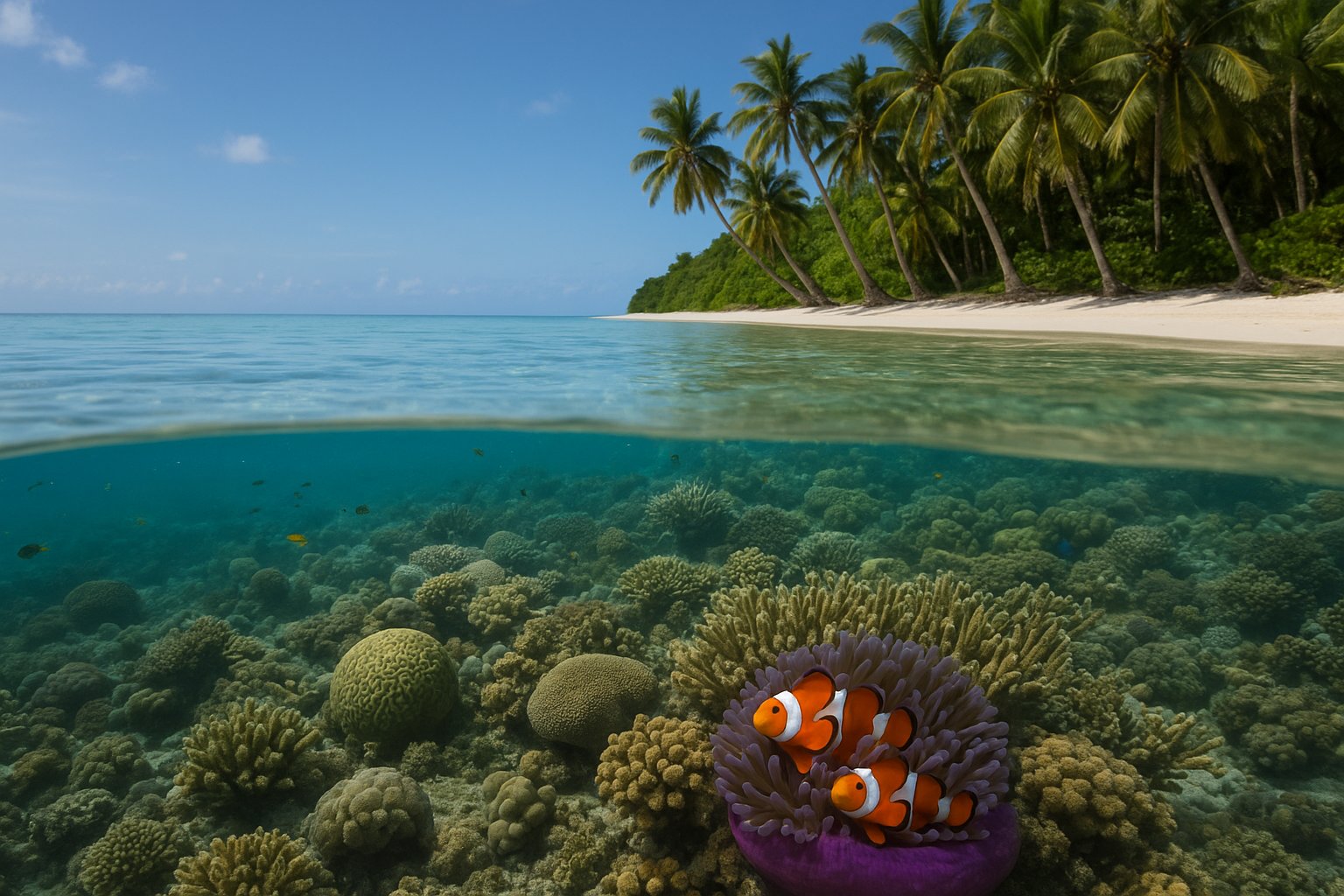
The Andamans are the Bay of Bengal's best-kept snorkeling secret. Havelock Island's shallow coral gardens start meters off the sand in calm, bath-warm water, with clownfish in anemones, turtles and parrotfish within snorkeling depth, and visibility that reaches up to 40 meters on the best days.
The reason to come here over Southeast Asia's famous reefs is the crowd math. The archipelago sees almost none of the Western tourist traffic that fills Thailand's and the Philippines' headline sites, so the same quality of shallow reef comes without the fleet of boats. It is also, for India, unusually easy to plan around: a short domestic flight, a scheduled catamaran and a handful of well-run operators.
- Shallow reef meters off the sand at Elephant Beach
- Up to 40 m visibility on the best days in peak season
- Sea temperatures of roughly 26–30°C year-round — no wetsuit needed
- A fraction of the traffic of Southeast Asia's famous reefs
Best sites to prioritize
Elephant Beach on Havelock (Swaraj Dweep) is the flagship. The shallow reef starts meters off the sand in calm water: clownfish in anemones, parrotfish, butterflyfish, blue starfish and green turtles. It is a 15-minute speedboat from Havelock jetty, or a 40-minute guided forest trek. Snorkel sessions run roughly ₹500–1,000, and it gets busy — take the first boat of the morning. Re-verify prices at booking rather than budgeting to the rupee.
North Bay Island, near Port Blair, is the arrival-day option: a 20-minute boat from the Rajiv Gandhi Water Sports Complex jetty, with shallow guided snorkeling plus glass-bottom boats and sea walks on the same trip. Ask about the Nemo Reef patch — clownfish sheltering in anemones, the closest thing to a guaranteed "Finding Nemo" moment near the capital. Expect roughly ₹470–1,500.
Jolly Buoy and Red Skin Island, in Mahatma Gandhi Marine National Park, are the pristine ones. You reach them by morning boat from Wandoor Jetty, about 25–30 km from Port Blair, and they hold some of the richest coral reefs in the Andamans in a plastic-free, day-visit-only national park. The two islands open on rotation — Jolly Buoy roughly November to April, Red Skin roughly May to October — so the reef rests. A park permit is required (about ₹50 for Indian nationals, ₹500 for foreign nationals, plus ₹850–1,800 for the boat). Both close on Wednesdays and in the monsoon.
When to go & conditions
October to February is peak season: calm seas, the clearest water — visibility commonly 15–30 m and up to roughly 40 m on the best days — and sea temperatures of about 26–29°C. Every spot including the marine-park islands is open, and it is the busiest stretch, so book ferries and operators ahead.
March to May is the shoulder: warm, mostly calm and with good visibility, hotter on land but very doable underwater, and with fewer crowds. June to September is the monsoon — avoid it for snorkeling. Seas turn rough, visibility drops, heavy rain sets in, boat and marine-park trips are frequently suspended and ferry schedules get disrupted. If a trip falls in that window, keep plans flexible.
The water is bath-warm all year — roughly 26–30°C — so a rash guard is about sun rather than chill, and a 3 mm shorty is plenty even for long sessions. These are sheltered island shallows and lagoon reefs rather than open-ocean drift, so currents are generally mild at the snorkel sites, though some deeper walls nearby run strong. The southwest monsoon is the real planning factor: rough seas, ferry cancellations and the marine-park islands shut.
Practical tips
Fly into Veer Savarkar International Airport (IXZ) at Port Blair — officially renamed Sri Vijaya Puram in 2024, though "Port Blair" remains in universal use. There are domestic connections from Chennai, Kolkata, Delhi and other Indian cities, and international visitors route via the Indian mainland; no scheduled direct international flights were verified. From Port Blair, private catamarans run to Havelock from Haddo Jetty (Gate 3) — Makruzz, Nautika (fastest, about 90 minutes), Green Ocean and ITT Majestic. The crossing takes 1.5–2.5 hours and costs roughly ₹1,300–3,150 depending on class. There are morning and early-afternoon departures only, with the last sailing usually around 2:30 PM, so book ahead in peak season and remember that monsoon cancellations happen and government DSS ferries act as backup.
Withdraw cash in Port Blair. ATMs are plentiful there, but Havelock has only two or three (often empty in peak season) and Neil Island one or two, so carry roughly ₹8,000–15,000 per family. UPI digital payments work where there is mobile network, but don't count on them at remote beaches or water-sports counters. Hindi and English are widely understood in tourism, with Bengali and Tamil also common among locals.
On entry, most foreign visitors need an Indian e-Tourist Visa — the 30-day multiple-entry option is applied for online at the official indianvisaonline.gov.in/evisa portal at least four days before travel, with a passport valid 6+ months and two blank pages. Re-check current arrival formalities before booking: India has added an e-Arrival Card requirement reported in 2026 guides. The Restricted Area Permit that once applied to Port Blair, Havelock and Neil was lifted in August 2018 and multiple firsthand traveler reports through 2024–2025 confirm no permit is asked for on the standard tourist circuit — but nationals of Afghanistan, China and Pakistan (and those of origin there) still need one, and separate Forest Department permits are still required for the marine national park islands. The US State Department still lists the islands as a restricted area, so re-confirm with an Indian embassy before booking. Travel-admin facts for this destination — entry, the nearest hospital in Port Blair and the emergency numbers — are in the Concierge panel on the destination page.
Book your Andaman Islands, India snorkeling
Every button opens one of our booking partners live — tours on Viator, flights on Aviasales, hotels on Booking.com — where you set your own dates and see current prices and availability.
Affiliate links — we may earn a commission at no extra cost to you. No prices are shown here: each partner's live site shows prices and availability for your dates.
Planning this trip?
Get the whole journey built end-to-end — flights, stays, boat days, gear and day-by-day timing notes — by the Double Fathom Concierge for a one-time $29. Re-plan any time, chat support through the trip, a destination-specific packing list, curated off-menu operators, and a printable offline PDF itinerary.
Secure checkout by Stripe — pay by card, receipt by email. A one-time, per-trip purchase — nothing recurring, and no rush either way.
Get the occasional best-reef dispatch
Trip-planning tips, seasonal reef picks and new-destination notes. No spam, unsubscribe anytime.
Explore the destination
India’s Andaman archipelago is the Bay of Bengal’s best-kept snorkeling secret: Havelock Island’s shallow coral gardens deliver up to 40 m of visibility in bath-warm water, with clownfish, turtles and parrotfish metres from the sand, and almost none of the Western tourist traffic of Southeast Asia’s famous reefs. This is the rare "world’s best" destination that still feels undiscovered. Plan around the monsoon: roughly June to September the seas roughen, boat and marine-park trips are frequently suspended and ferry schedules get disrupted.
Andaman Islands, India destination guide →