
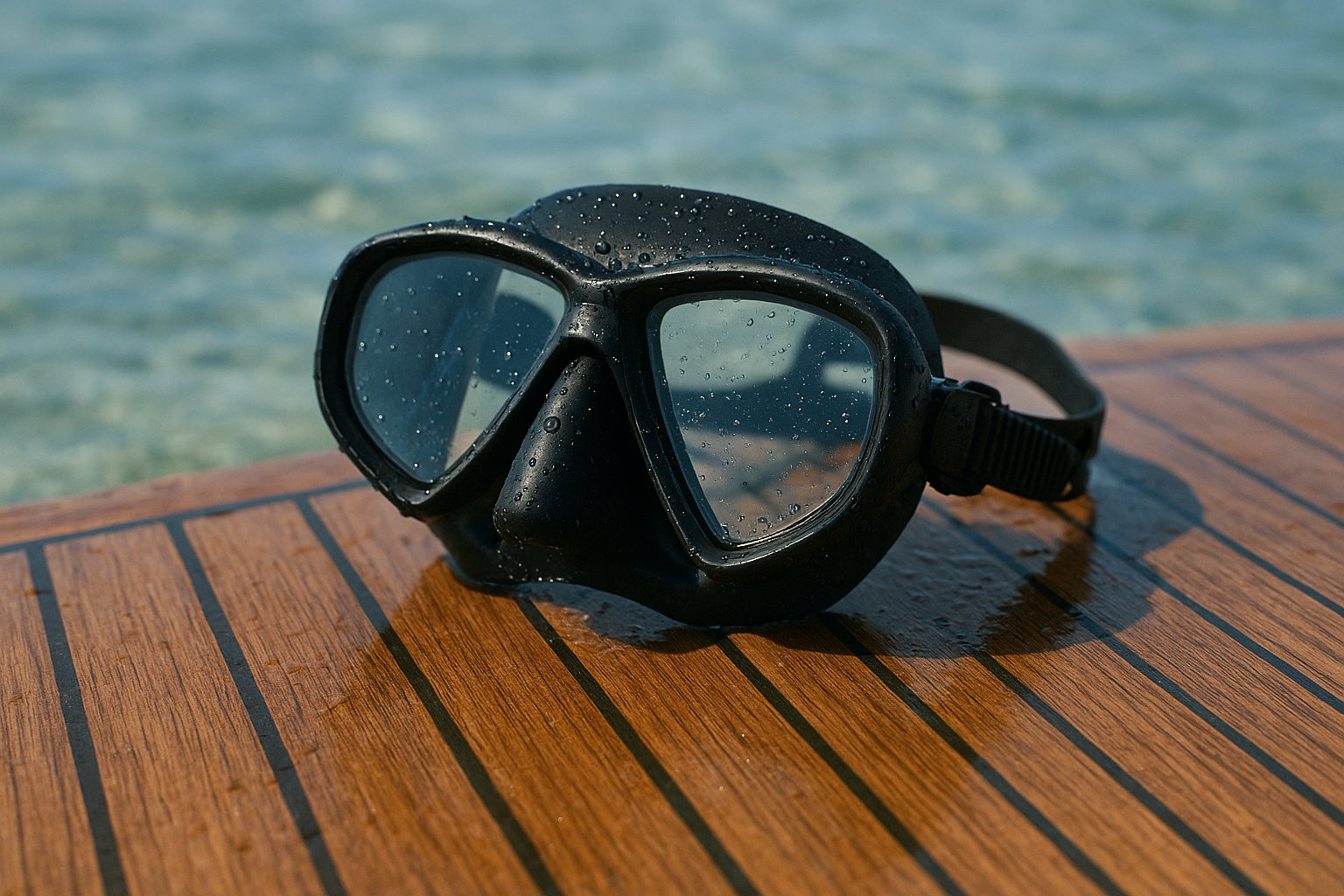
A low-volume snorkel mask with a tempered-glass lens on a teak boat deck

The Best Snorkel Masks of 2026

A Double Fathom gear guide

Your mask is the piece of gear you’ll notice most on a snorkel trip — for better or worse. Fins that don’t quite suit you are a nuisance; a mask that leaks, fogs, or fights your breathing colors every single minute in the water. That’s why we start every gear conversation here: with the mask (and the snorkel that goes with it), chosen honestly, from the short list our travelers actually pack.

This guide covers the three picks on our gear hub: the Seaview 180 V3 full-face mask, the mask we swim with at Double Fathom; the Cressi F1 frameless mask, our classic-mask pick for almost everyone; and the Cressi Supernova dry snorkel, the piece that turns the F1 into a complete setup. Two masks and the snorkel that pairs with one of them — because “best mask” is really a question about how you want to breathe in the water, and both answers are on this page.

We keep this guide honest the same way we keep the gear hub honest: every product here already ships on our gear hub, every affiliate link is the exact link from that page, and every pro and con below matches what we already say about each product. No invented tests, no borrowed opinions, and no prices in the copy — prices change, and a guide that quotes them goes stale the day it’s written.

Heads up: some links on this page may earn us a commission at no extra cost to you. It keeps our reef guides free.

Our 2026 picks at a glance

PickTypeBest forStandout
Seaview 180 V3 Full Face Snorkel MaskFull-face maskBreathing naturally with a full panoramic viewFlowTech airflow and a GoPro mount — the mask we swim with at Double Fathom
Cressi F1 Frameless MaskClassic frameless maskAlmost everyone — low volume, fits most faces, packs flatLow internal volume makes clearing easy for beginners
Cressi Supernova Dry SnorkelDry-top snorkel (completes a classic setup)Choppy water — dry-top keeps waves outSeals out spray and chop with a purge valve for easy clearing

The picks, in detail

Seaview 180 V3 Full Face Snorkel Mask

Full-face mask — the mask we swim with at Double Fathom

The Seaview 180 V3 is the full-face mask our travelers actually use, and the reason is simple: it changes how breathing feels underwater. Because the mask covers your whole face, you breathe naturally through your nose and mouth — the way you do on land — instead of clamping down on a mouthpiece. For first-timers who find that mouthpiece uncomfortable, or for anyone who wants to actually relax on a long float over a reef, that difference is the whole ballgame.

The 180° panoramic view is the second reason. A full-face design puts the lens across your entire field of vision, so the reef doesn’t sit in a frame — it surrounds you. FlowTech airflow keeps air moving through the chamber, the built-in GoPro mount means your footage lines up with what you’re actually seeing, and the mask comes in three sizes so the fit can be right rather than close enough.

One honest note we make on the gear hub and repeat here: full-face masks aren’t for young children. We recommend a minimum body weight of 25–30 kg, and an adult should always be close by. In March 2026 the US Consumer Product Safety Commission warned consumers to stop using OUSPT full-face snorkel masks after reports of labored breathing and loss of consciousness. That warning was brand-specific, but it’s a reminder of the basics: buy a reputable mask, check the fit, and never snorkel alone.

Pros

  • Breathe naturally through your nose and mouth
  • 180° panoramic view — the reef surrounds you
  • FlowTech airflow keeps breathing comfortable
  • Built-in GoPro mount for hands-free footage
  • Three sizes for the perfect fit

Cons

  • Not for young children — 25–30 kg minimum body weight
  • Bulkier to pack than a classic mask
  • Fit matters more — it needs the right size to seal properly

Best forBreathing naturally with a full panoramic view.

Cressi F1 Frameless Mask

Classic frameless mask — pairs with a separate snorkel

If you’re buying your first real mask, this is the one to start with — and if you’ve snorkeled for years, it’s probably the one you already own. The F1 is a frameless mask, which means the lens and skirt are a single molded unit: no frame to add bulk, no extra points of failure. What you get is a mask that’s compact, comfortable, and almost invisible once you’re in the water.

The technical detail that matters most is internal volume. The F1’s low volume means there’s very little air inside to push out when the mask fogs or takes on water — clearing is a small, quick action rather than a project. That’s exactly what a beginner needs, and it’s why this mask has stayed on our gear hub as the pick for almost everyone.

It also fits a wide range of faces, which matters more than any other spec on paper. A mask that seals on someone else’s face tells you nothing about yours; the F1’s soft silicone skirt molds to a lot of them, and when it seals, it stays sealed. And because the frameless design packs nearly flat in a carry-on, it’s the mask we’d tell you to bring on any trip where luggage space is tight. Pair it with a separate snorkel — the Cressi Supernova below is the natural companion — and you have a classic setup that will outlast several vacations.

Pros

  • Low internal volume makes clearing easy for beginners
  • Fits a wide range of faces
  • Packs nearly flat in a carry-on
  • Frameless design — compact, no extra bulk
  • Comfortable for long sessions

Cons

  • A classic mask — you’ll need a separate snorkel
  • No GoPro mount — you’ll hand-hold or use a mouthpiece mount

Best forAlmost everyone — low volume, fits most faces, packs flat.

Cressi Supernova Dry Snorkel

Dry-top snorkel — completes a classic mask setup

A mask is only half of a classic setup, and the snorkel you pair with it decides whether a breezy day feels easy or exhausting. The Supernova is a dry snorkel: a valve at the top of the tube seals out spray and chop, so you’re not swallowing seawater every time a wave passes or a boat wake rolls through. In anything less than glassy water, this is the difference between relaxing and fighting your gear.

The details below the valve matter just as much. The mouthpiece is soft silicone that doesn’t leave your jaw aching after an hour, and the purge valve at the bottom means clearing the tube is a single exhale rather than a full blast of water up and out. Together they make the Supernova a snorkel that disappears while you’re using it — which is the highest compliment we can give one.

On flat, glassy water, a simple snorkel tube would do the same job for less. The Supernova earns its keep on the days the water isn’t perfect — which, on any real trip, is most of them. It’s the snorkel on our gear hub, and it’s the one we’d pair with the Cressi F1 for a classic setup that handles chop as well as calm.

Pros

  • Dry-top valve seals out spray and chop
  • Purge valve makes clearing a single exhale
  • Soft mouthpiece stays comfortable for hours
  • Keeps breathing simple in imperfect water

Cons

  • It’s a snorkel, not a mask — pair it with one
  • More than you need on perfectly glassy days

Best forChoppy water — dry-top keeps waves out.

How to choose a snorkel mask

Fit and seal come before everything

Every other spec on a box is negotiable; fit is not. The test is simple: push the mask gently against your face without using the strap. It should hold with light suction and no pressure points across your forehead or the bridge of your nose. Hairline, glasses, and even sunscreen oil on your skin can break a seal, so test with a clean, dry face. A mask that leaks on day one will leak on every day after — no defog or strap-tightening fixes a wrong fit.

Full-face or classic — decide how you want to breathe

This is the one real fork in the road. A full-face mask lets you breathe through your nose and mouth, exactly as you do on land, which is why first-timers tend to find them the easiest to relax in. A classic mask breathes through your mouth via a separate snorkel, and rewards you with lower bulk, easier clearing, and a setup that packs smaller. Neither is better; they’re different tools for different swimmers. Our own go-to set carries one of each — the Seaview 180 V3 full-face and the Cressi F1 classic — because we genuinely think both belong in the conversation.

Pair a classic mask with a dry-top snorkel

If you go the classic route, the snorkel matters as much as the mask. A dry-top snorkel like the Cressi Supernova seals out spray and chop, so a wave passing over the tube doesn’t turn into a mouthful of seawater. Look for a soft silicone mouthpiece and a purge valve — both turn clearing and breathing into afterthoughts instead of chores. If you buy the F1, this is the snorkel we’d hand you with it.

Pack for the trip you’re taking

Masks are small, but they’re not all equally small. The F1’s frameless design packs nearly flat in a carry-on, which makes it the easy choice for carry-on-only travel. The Seaview’s full-face design is bulkier by nature — worth it for the breathing and the view, but give it the room it needs in your bag rather than crushing it under everything else. A crushed silicone skirt holds its crease, and a creased skirt leaks.

Buy a reputable mask and snorkel with a buddy

The safety basics we repeat on every gear page apply doubly when the equipment covers your face. Buy from a brand with a track record, check the fit before you travel, and never snorkel alone — an adult should always be close by, and full-face masks aren’t for young children (we recommend a minimum body weight of 25–30 kg). The US Consumer Product Safety Commission’s March 2026 warning about OUSPT full-face masks was brand-specific, but the lesson behind it is general: gear you trust, a fit you’ve checked, and someone watching is what keeps a good day good.

Snorkel masks — questions

Do I need a full-face mask to snorkel well?

No — it comes down to how you like to breathe. A full-face mask like the Seaview 180 V3 lets you breathe naturally through your nose and mouth with a 180° panoramic view, while a classic mask like the Cressi F1 pairs with a separate snorkel and breathes through your mouth alone. Both are excellent; neither is required for good snorkeling.

Can children use a full-face mask?

Our standing advice from the gear hub: full-face masks aren’t for young children — we recommend a minimum body weight of 25–30 kg, and an adult should always be close by. For younger kids, a classic mask with a simple snorkel is the safer starting point.

Do I still need a snorkel with the Cressi F1?

Yes. The F1 is a classic mask, so it pairs with a separate snorkel — we’d hand you the Cressi Supernova dry snorkel, whose dry-top valve seals out spray and chop so you’re not swallowing seawater every time a wave passes.

How do I know a mask fits my face?

Fit is the one thing no guide can decide for you. Push the mask gently against your face without using the strap — it should hold with light suction, with no pressure points on your forehead or the bridge of your nose. Both masks we recommend come in fits that suit a wide range of faces; the Seaview comes in three sizes for exactly this reason.

The full gear hub

Masks are where a snorkel trip starts, not where it ends. The full gear hub covers everything we recommend for the reef — fins, wetsuits, rash guards, reef-safe sunscreen, and the camera we swim with — each with the same honest why-we-pick-it note.

Open the full gear hub